Last reviewed: 11 August 2026
Independent information note: This page consolidates verified federal government-linked programmes for widows and divorced women in Pakistan as of 11 August 2026. Availability, rules, and procedures can change. Readers should verify current conditions on the official sites linked below. This page is not a government site.
Federal programmes for widows and divorced women
Pakistan’s federal programmes include the Pakistan Bait-ul-Mal (PBM) and the Benazir Income Support Programme (BISP). Both operate through official channels and subject to conditions that can change. Widow or divorce status alone does not determine eligibility; applicants must meet programme-specific criteria that are reviewed through official processes. Readers should consult the official portals for the most current information.
Pakistan Bait-ul-Mal (PBM)
PBM administers the Individual Financial Assistance (IFA) scheme to support poor households. The IFA framework targets a range of vulnerable groups, including widows, destitute women, orphans, persons with disabilities, and widowed/divorced/separated women raising children. PBM describes its approach as multi-pronged, with components that can include general financial support, medical treatment, education, and rehabilitation, with exact scope and availability governed by PBM’s published conditions—subject to update. readers should consult the PBM IFA page for the official descriptions of offerings, eligibility criteria, and exclusions.
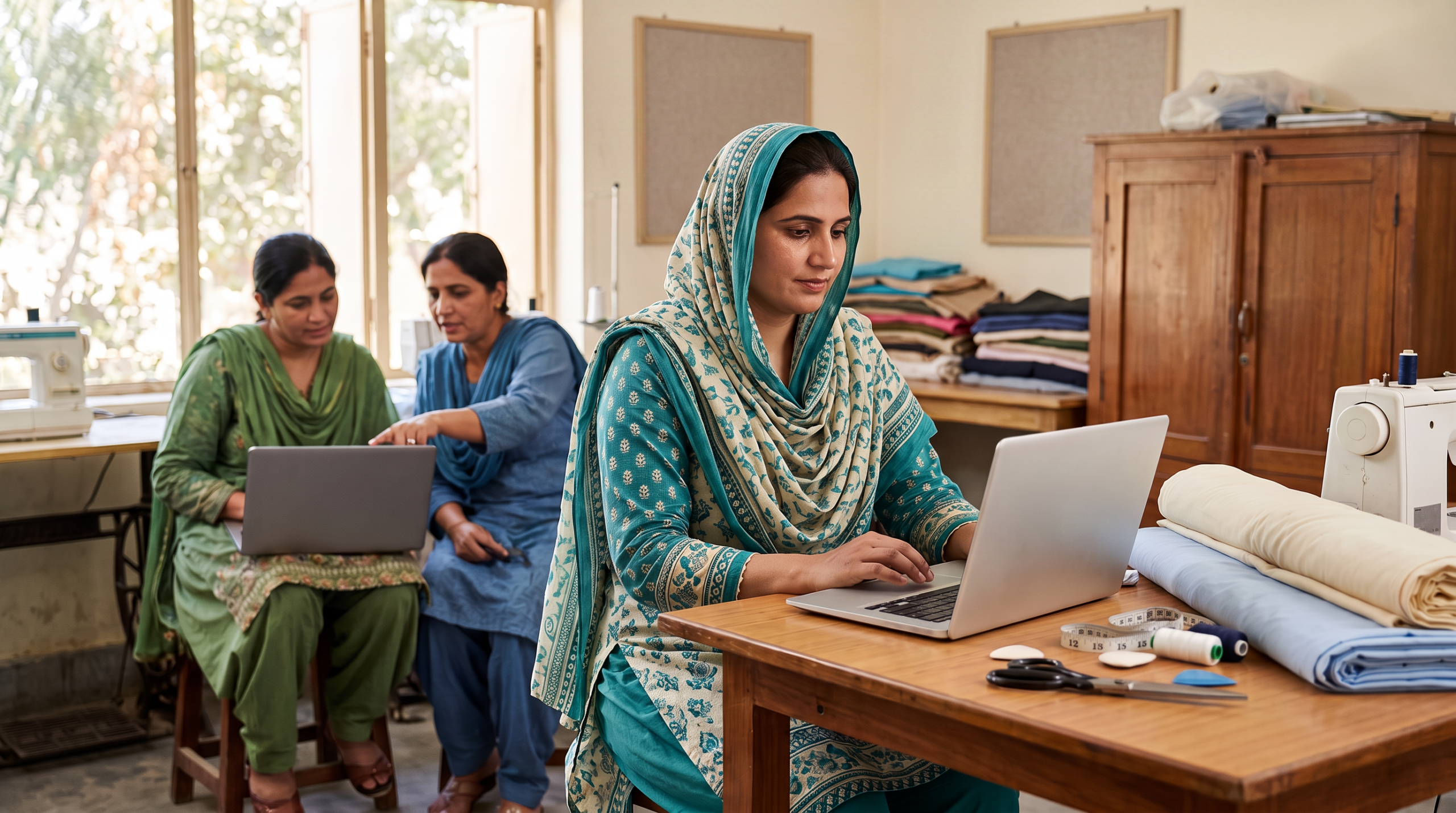
PBM notes priority for certain groups, such as widows and persons with disabilities. This prioritization does not guarantee approval and availability can vary by district and over time. PBM education support is described as available to eligible students in government/public-sector institutions; students in private or self-financed institutions, and children of government employees, are not covered by this particular benefit. PBM also operates Women Empowerment Centres that train widows, orphans, and low-income girls in courses such as tailoring, embroidery, basic/advanced computer skills, beautician work, fabric painting, and knitting. Availability and any stipends must be confirmed with PBM directly.
PBM describes an orphan-and-widow support programme that covers family-based support, education, healthcare, vocational training, and conditional transfers. Availability and access to this programme should be confirmed with PBM, as rollout and eligibility may vary by district. In practice, PBM’s family-support framework can include multiple elements, each with its own rules and conditions.
How to proceed with PBM:
- Consult the PBM projects page to understand the scope of available PBM programmes and any district-specific information.
- Review the PBM IFA page for the official description of offerings, eligibility criteria, and exclusions.
- Be prepared to document family status, income, and disability status if applicable, and have relevant government-issued identity documents ready for submission.
- Contact PBM through official channels or PBM offices to confirm current availability and obtain step-by-step guidance on the application process. Availability and rules can change; always verify.
Official PBM descriptions to consult for current information:
PBM Women Empowerment Centres
PBM operates Women Empowerment Centres that train widows, orphans, and low-income girls in practical skills. Courses include tailoring, embroidery, computer skills, beautician work, fabric painting, and knitting. Any attendance-based stipends or stipends related to these training programmes are subject to PBM policy and variations by location; readers should confirm availability, eligibility, and any stipend with PBM directly.
How PBM fits with PBM IFA and education components
PBM’s IFA framework is described as a flexible set of possibilities that can cover general assistance, medical treatment, education, and rehabilitation, within the conditions published by PBM. Education support is described specifically for eligible students in government/public-sector institutions. When combining PBM components, applicants must verify current eligibility—because district-level administration and district-by-district rollout can affect which elements are accessible at any given time.
Benazir Income Support Programme (BISP)
BISP operates a federal, household-based protection framework. Eligibility and access are designed to be assessed through official channels. Widow or divorce status alone does not guarantee acceptance; eligibility is assessed on a household basis. The 8171 help line/portal is the recommended route for inquiries and status checks, and to locate BISP offices. Do not rely on assumptions about eligibility based on individual marital status; verify household criteria through official sources.
Key cautions:
- Do not claim that an online BISP registration form exists unless this has been officially confirmed. Use official channels to check eligibility and status via the 8171 portal or BISP offices.
- The 8171 portal is the official route for inquiries and status checks; it links to BISP offices where appropriate. Use this portal or visit an officially designated BISP office to discuss eligibility and next steps.
- Because BISP eligibility is household-based, a family-wide assessment is involved. Check official channels for the exact criteria applicable to your household and locality.
How to start with BISP
- Visit the BISP official site to understand program structure and current rules.
- Use the 8171 portal for inquiries and status checks, and to locate BISP offices in your area.
- Confirm, with official sources, whether your household meets the current criteria and what documentation is required.
Official BISP resources:
Document checklist and practical steps
To help applicants prepare and avoid delays or miscommunication, follow this practical sequence. The steps emphasize verifying current conditions on official sites and confirming any programme’s status before starting an application.
- Identify the relevant federal programme for your situation, such as PBM IFA, a PBM education or training component, or BISP.
- Review official programme pages for eligibility criteria and the latest rules. Availability and conditions can change.
- Gather core identity documents commonly requested across PBM and related schemes (see the document checklist below). Prepare any disability-related documents if applicable, but rely on official guidance for PBM-related needs.
- Gather evidence of household status if applying to BISP (household-based assessment). Do not assume eligibility based on widow/divorce status alone; confirm through official channels.
- Prepare enrollment or attendance evidence if seeking PBM education-related support (government/public-sector institutions).
- Contact official PBM or BISP channels to confirm current availability and obtain step-by-step guidance. Avoid third-party intermediaries who promise guarantees or quick approvals.
- Keep records of inquiries, submitted documents, and dates. Note that programme availability can change even after an initial approval.
Document checklist (PBM and general schemes)
| Document item | Purpose / relevance | Notes |
|---|---|---|
| CNIC and/or B-Form | Primary identity and eligibility reference across PBM schemes; often required for multiple components. | Ensure the CNIC/B-Form is valid and up to date. |
| Disability certificate or NADRA CNIC with disability logo | Needed for disability-related assistance under PBM and provincial components where applicable. | Provide the most recent documentation if applicable; criteria can vary by programme. |
| Proof of education enrollment (government/public-sector institutions) | Needed for PBM education assistance under the IFA framework. | Private or self-financed students and children of government employees may be excluded from PBM education benefits. |
| Proof of income or need (where required by PBM components) | Illustrates eligibility for general or need-based components. | Exact requirements vary; confirm with PBM for current conditions. |
FAQs: practical clarifications
Are these programmes guaranteed to provide support to widows or divorced women?
No. Official information emphasizes that eligibility is determined by formal criteria, and approval is not guaranteed. PBM prioritizes widows and disabled cases, but each component has its own conditions and exclusions. BISP eligibility is household-based and is not automatic based on widow or divorce status. Readers should verify current conditions with official sources before counting on any outcome.
How do I verify current conditions and apply?
Federal programmes provide information through official pages and portals. For PBM, consult the PBM projects and PBM IFA pages. For BISP, use the official site and the 8171 portal for inquiries and status checks. Availability, qualification criteria, and application steps can change, so rely on the latest official communications and portals for the current process.
What documents should I prepare ahead of applying?
Key documents commonly required across PBM components include a valid CNIC or B-Form, and, where relevant, a disability certificate or NADRA CNIC with disability logo. For PBM education support, be prepared to show enrollment in a government/public-sector institution. Always confirm exact document requirements with official programme pages or offices before submitting anything.
How can I protect myself from scams?
Be cautious of offers that promise guaranteed approval, quick cash, or positions outside official channels. Do not share sensitive personal information except through verified official portals or in person at authorized PBM or BISP offices. Avoid third-party intermediaries who claim to expedite government assistance. Always verify the current status and required documents directly with official sites or by visiting designated offices.
Comparative snapshot of the main federal options
The table below compares the two main federal pathways relevant to widows and divorced women. Do not assume eligibility based on marital status alone; confirm through official channels.
| Programme category | Scope | Who is prioritized / targeted | Typical components (no amounts) | Notes on availability | Where to apply / learn more |
|---|---|---|---|---|---|
| PBM Individual Financial Assistance (IFA) | Federal | Widows, destitute women, orphans, persons with disabilities, widowed/divorced/separated women raising children | General assistance, medical treatment, education, rehabilitation; PBM education limited to government/public-sector schools | Priority to widows and disabled; availability varies by district and over time | Pakistan Bait-ul-Mal projects • Pakistan Bait-ul-Mal IFA |
| BISP | Federal | Household-based; not guaranteed by widow/divorce status | Household-based assistance; status and procedures depend on official assessments | Eligibility checked through official channels; no universal online form confirmation | BISP official site • 8171 portal |
Conclusion
Readers seeking support for widows and divorced women in Pakistan can begin with the federal PBM and BISP pathways. The PBM IFA framework includes several possible components, such as education and health-related assistance, subject to PBM’s published conditions and local availability. BISP offers a household-based safety net, but eligibility is not determined solely by widow or divorce status and must be verified through official channels. In every case, verification through official sources is essential. Readers should approach every programme with caution and rely on the current information published by the competent authorities.
Editorial note: Agencies decide eligibility, and information can change over time. Always confirm current eligibility, required documents, and application steps directly with the appropriate official agencies.