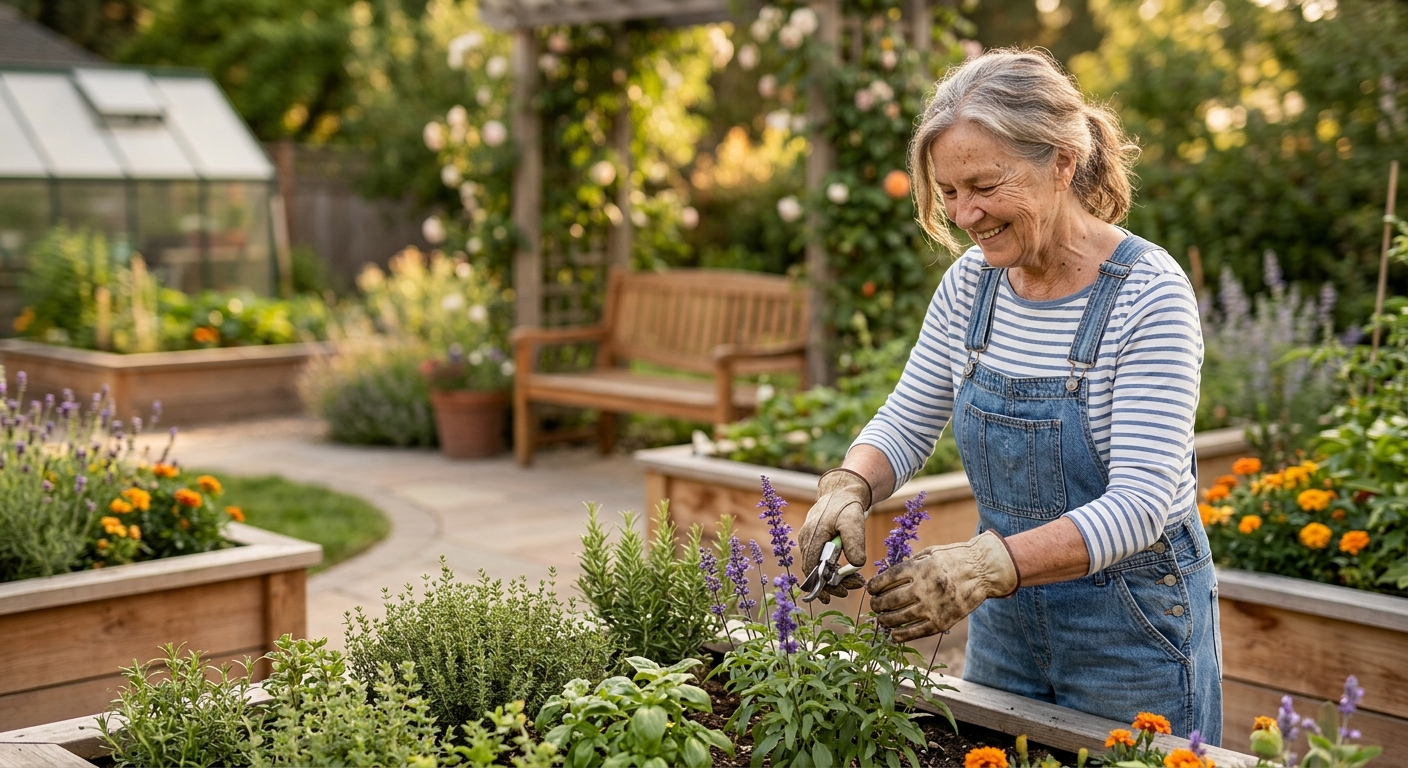
Creating a Senior-Friendly Garden
Let me tell you a quick story about Edna, one of my favorite readers. Edna is 78 and lives alone just outside of Madison, Wisconsin. Gardening has always been her thing, a true Midwesterner, she grew up with her hands in the soil, canning tomatoes every summer. But over the last few years, arthritis claimed more of her joints, and Edna told me she feared her gardening days were over. She said, “I just can’t kneel like I used to. Even walking across my yard is tough now.”
This struck a nerve with me. Because the truth is, Edna’s not alone. More than 60 percent of Americans age 65 and older say they wish they could spend more time outdoors, according to an AARP survey from late 2023. Yet, I’ve seen so many older adults give up on the hobby they love, worried that it’s just too risky or physically demanding.
But what if I told you that gardening isn’t an all-or-nothing proposition, especially for seniors? With the right modifications, almost any outdoor space can be transformed into a vibrant, accessible garden that brings joy, fresh air, and a sense of accomplishment. Not only does senior gardening keep us active, but a 2024 Johns Hopkins study found that avid gardeners ages 70-plus reduced their risk of depression and cognitive decline by nearly 30%, compared to peers who didn’t garden.
So, why does this matter so much? Because it’s about more than pretty plants. Gardening gives us a sense of purpose, agency over our surroundings, and daily opportunities for gentle movement. It’s vital for physical and emotional health. I’ve spent the last decade helping families, including people like Edna, remake their gardens into senior-friendly oases. Let’s get into the nuts and bolts of how you can do the same, whether you’re adapting your own backyard, helping a parent, or advising a neighbor.
Start With Safety: Mapping Out an Accessible Garden
Before a single seed goes in the ground, I always start by walking the space with the person who’ll be using it. For seniors especially, comfort and safety are non-negotiable. Imagine you’re entering the garden, do you see any trip hazards, uneven stones, or steps without handrails? These might seem minor to younger bodies, but for older adults, they can spell disaster. The CDC reports that falls are the leading cause of injury for people age 65 and older, so this is not just about convenience.
Here’s what I recommend in the initial assessment:
- Smooth, Wide Pathways: Paths should be at least 36” wide to allow walkers or even wheelchairs. Crushed stone, decomposed granite, or rubber tiles (about $2-5/sq ft at most hardware stores) are easier on the joints than concrete and give better grip.
- Gentle Slopes and Ramps: If there are steps, consider replacing with a ramp or adding sturdy outdoor handrails. Look for textured rails for extra security (expect to pay around $30-50 for a 4-foot kit at Home Depot or Lowe’s).
- Eliminate Clutter: Move hoses, tools, and pots off walkways. Use hose reels ($25-40) or coil-shaped holders to keep things tidy.
Imagine Helen, a retired nurse in Atlanta, who kept tripping over her garden hose until her daughter installed a $32 wall-mounted reel for her. That tiny change was all it took to make the garden feel welcoming again.
Pro Tip: Walk the garden at least twice, once with your loved one, and once at dusk or dawn when lighting might be an issue. It’s shocking how different a path looks in low light.
A common mistake? Underestimating how small details can become huge barriers. Even a half-inch rise in pavers can trip up a senior. So, scrutinize every step, stone, and seam.
Raised Beds: The Knees Best Friend
If I could wave a magic wand and add one feature to every senior’s yard, it would be raised beds. Picture this: you’re tending marigolds and snap peas, but instead of bending double, you just reach out your hand. Raised beds reduce strain on backs and knees, a true game-changer for older adults with arthritis, balance issues, or joint replacements.
After helping hundreds of older gardeners, I’ve found the ideal raised bed height is 24 to 30 inches. Anything lower and you’re still stooping, higher and it becomes less stable. Cedar kits (like those from Greenes Fence Company, about $48 for a 4×4’ kit at Amazon or local garden centers) are easy to assemble and resist rot.
Here’s what Edna did: her son built her a 4×8’ cedar bed, 28” high, on legs. She positioned it near her patio so she could garden from her rollator seat.
- Choose wide bed edges: Look for beds with 3” wide toppers, you can perch on these while working.
- Set up irrigation: Seniors should not lug heavy watering cans. A simple drip kit ($30-40) with a timer makes sure everything gets watered without heavy lifting.
Pro Tip: Fill raised beds with a mix of topsoil, compost, and potting mix for extra fluff and nutrients. This not only helps plants thrive but also means less digging for tender wrists.
Don’t fall for the “off-the-shelf” temptation, some low-cost raised beds are flimsy or too shallow. Look for solid wood or food-safe plastic, and check stability before adding soil.
Easy Access to Tools and Supplies
When I ask older gardeners about their biggest frustration, one answer comes up every time: “Where did I put my trowel?” Small tools, gloves, and seeds have a way of vanishing, and for seniors with memory issues or limited mobility, that hunt is exhausting. Further clinical recommendations are outlined by the National Institute on Aging.
Let’s talk solutions that keep everything within arm’s reach:
– Garden carts and rolling seats: Invest in a sturdy rolling garden seat with built-in storage (something like the Suncast Garden Scooter, which runs about $36). Not only does it carry tools, but it also provides a safe place to rest.
– Vertical storage: For spaces with a wall or fence, a $15 wall-mounted pegboard or weatherproof tool rack keeps everything visible and accessible.
– Aprons with pockets: A heavy-duty apron with lots of pockets (expect to pay $18-32) is a simple way to keep snips and seeds handy.
A reader of mine, June from Seattle, swears by her rolling seat. “I just load it up with gloves and pruners in the morning, and I don’t have to get up or lean over all day.”
Pro Tip: Mark handles of all tools with blaze orange reflective tape. I learned this from a long-term care therapist, when a tool gets dropped in the grass, you’ll spot it instantly.
Here’s a mistake to avoid: buying “cute” little tool belts designed for professional landscapers. They often have too many tiny compartments, which can frustrate arthritic fingers. Stick to simple, deep pockets.
Ergonomic Tools: Small Changes, Big Comfort
Now, you might be thinking, “Aren’t all garden tools the same?” Honestly, not even close. Seniors need lightweight, easy-grip options that don’t stress stiff hands or weak wrists. The days of heavy forged iron trowels are over.
I used to think “accessible” meant ugly. I hate admitting that. I pictured hospital rails and beige everything. Then one Saturday in April 2020, I took Grandma to the Missouri Botanical Garden’s little accessibility tour—right before everything in the world shut down—and I noticed how discreet the smart choices were. Wider paths. Raised beds tucked into the design like they’d always been there. Places to rest that didn’t scream “frail.” On the drive home, she kept rubbing a rosemary sprig between her fingers, sniffing it like it was a secret. That’s when it clicked for me: the goal isn’t to make a garden look safer. The goal is to make it feel possible again, without taking the person’s pride with it.
I used to think gardening was about stamina. You push through. You finish the row. That’s how my grandpa taught me, back when I was a kid visiting them in Ohio, sweating through my T-shirt and feeling proud of blisters like they were medals. Then came the year Bernice started forgetting where she left the trowel—over and over—and I realized I was measuring the wrong thing. The win wasn’t “getting it done.” The win was her stepping outside at all. One afternoon in August 2017, I heard her call my name from the porch, frustrated, because the sun was too bright and she couldn’t tell the weeds from the flowers. That’s when I started thinking about contrast, clear paths, and simple routines—small changes that kept her from feeling lost.
One thing I didn’t expect: grief can show up in the garden. The first time I realized Loretta couldn’t remember the difference between basil and mint, I laughed—then I felt awful for laughing, because it wasn’t funny, it was dementia doing what it does. We were in her backyard, and the air smelled like wet pine straw after a morning storm. She kept rubbing the leaves between her fingers like she could squeeze the memory out. That was the day I stopped chasing the “old normal” and started building a new one. If you’re adjusting a garden for an older adult, you’re not just moving pots around. You’re protecting dignity. You’re making room for good days. And yes, some days still break your heart a little.
Here’s my go-to set for elderly gardening tips:
- Padded, easy-grip handles: Look for contour-shaped tools from brands like Radius Garden. Their “Ergonomic Hand Tool Set” usually sells for about $32 and the handles are larger and softer than traditional tools.
- Long-handled weeders and cultivators: This is a huge win for those with back or hip issues. The Fiskars 4-Claw Weeder ($42 at most big box stores) lets you pull dandelions from a standing position.
- Lightweight watering wands: Instead of heavy hoses, a lightweight wand like the Dramm One Touch ($27) gives precise control and saves those precious joints.
Rosa, an 82-year-old client with severe arthritis in Dallas, raved about switching to ergonomic pruners (the Gardena Comfort Line, $25). Suddenly, pruning her roses wasn’t painful anymore. For more guidance, read our article on Understanding Osteoporosis in Senior Women. The Harvard Health Publishing maintains a comprehensive database of resources for seniors and families.
Pro Tip: Try out tools in-store before buying if possible. I always suggest this. What feels light to one person may feel awkward to another, so don’t go by online reviews alone.
A mistake I see all too often is splurging on “gimmick” tools. Stick with basic, robust designs. Avoid models with fiddly latches or complicated mechanisms, which can break after one season.
Container Gardening: Maximum Color, Minimal Strain
Not every yard can support raised beds, but every porch, deck, or window can host a beautiful container garden. Seniors, especially those with space or mobility constraints, can still nurture tomatoes, herbs, or petunias, and enjoy the sensory delight of touching and smelling their favorite plants.
For the best accessibility:
– Use lightweight, self-watering pots: Brands like Lechuza and Gardener’s Supply start at around $28 for 16-18” planters. These pots are less likely to be tipped over by wind or pets, and the water reservoirs cut down on lifting heavy cans.
– Group pots at waist height: Use sturdy, wide plant stands or reclaimed tables (yard sales are gold mines) to reduce bending. Keep everything clustered near seating areas.
– Grow compact, low-maintenance plants: Dwarf tomatoes, patio blueberries, and culinary herbs like basil provide quick wins and a sense of accomplishment.
Take Shirley from Raleigh. At 89, she gave up her backyard but now grows more than ten varieties of herbs on her sunny balcony. Her daughters surprised her with a rolling cedar planter on casters ($45) so she can move it to catch the best light.
Pro Tip: Use foam packing peanuts or empty water bottles in the bottom half of larger pots. It lightens the load and improves drainage, just cover with a few inches of potting mix.
Here’s a mistake I see: choosing heavy ceramic planters “because they look pretty.” Stick with resin or food-safe plastic, especially if pots need to be moved.
Designing with Comfort and Beauty in Mind
Sure, safety and access are critical. But let’s not forget the reason we garden in the first place: joy, beauty, and that daily connection with nature. Seniors shouldn’t have to settle for a bland, utilitarian space. For further guidance, the National Institute of Mental Health offers comprehensive resources on this topic.
One approach I love (and always recommend) is sensory gardening. Include fragrant plants, bird feeders, and vibrant flowers to stimulate the senses:
– Fragrant flowers like lavender, sweet alyssum, and roses cost as little as $15 for starter shrubs. Their scent offers memory boosts and uplifts the spirit.
– Bird houses and feeders: A simple feeder (around $18) draws in cardinals, chickadees, and goldfinches. Auditory stimulation is especially helpful for those with vision loss.
– Fountains or solar water features: For about $30, a solar-powered fountain provides gentle sound and visual interest. The hum of water soothes and masks neighborhood noise.
Consider Barbara, who struggled with vision loss in her late 70s. Her daughter planted bright geraniums and sunflowers at eye level, added a solar fountain, and hung chimes. Barbara now spends hours listening to birdsong and feeling the petals, her garden is her sanctuary.
Pro Tip: Paint raised bed edges or container rims in cheerful, highly visible colors. It’s fun, adds a personal touch, and helps those with depth perception problems spot boundaries.
Common mistakes here usually involve “over-designing.” Don’t pack in too many plant varieties or make the garden feel cluttered. Think bold contrasts, clear pathways, and a few focal points, less really is more.
Weather Protection: Shade, Shelter, and Comfortable Seating
This isn’t Florida, most of us face unpredictable weather, whether it’s sweltering heat, sudden rain, or chilly breezes. Seniors are especially sensitive to extremes, and heat-related illness is no joke. A 2024 CDC report found that heatstroke risk jumps almost threefold in adults over 70.
So, what can you do? Start by making sure there’s always a comfortable, shaded spot nearby, and a dry place to stash tools or sit out a passing shower.
- Portable canopies and umbrellas: A 7-foot adjustable garden umbrella costs about $35 and sets up in minutes.
- Permanent shade: Budget around $50-100 for a UV-resistant, weatherproof sun sail. Mount it securely over a sitting area.
- All-weather furniture: Bench swings or gliders ($45-75 for basic models) are sturdy, comfy, and allow for hours of enjoyment.
Margaret, who gardens from her wheelchair in Des Moines, has a $38 canopy over her patio garden, plus a lightweight, foldable chair with mesh fabric for airflow. She stays cool even on July afternoons.
Pro Tip: Always stash a wide-brimmed hat, sunglasses, and SPF 50 sunscreen in a weatherproof tote by the door. Senior skin is far more sensitive.
A misstep I see is underestimating just how fast heatstroke or chills can creep up. Encourage loved ones to sip water, take breaks, and garden early in the morning or later in the evening when temperatures are milder. For more guidance, read our article on Financial Planning for Long-Term Care. For more information, the WebMD publishes regularly updated guidelines on this topic.
Inviting Friends and Family: Making Gardening Social
Gardens aren’t just about plants, they’re about people. Some of my favorite client success stories involved seniors who invited friends, grandkids, or neighbors to help. Not only does this take some physical pressure off, but it also combats loneliness and rekindles a sense of purpose.
One afternoon, Grandma wandered outside with a trowel and I followed her like a shadow, trying not to let her see I was scared. She stopped near the hydrangeas and asked, “Now… what do we do first?” My throat tightened. She’d planted those hydrangeas twenty years earlier. I wanted to fix it—fix her memory, fix time—and I couldn’t. So I learned to anchor the moment with small, real things: a labeled seed packet, a red Fiskars hand pruner she could spot easily, a little basket for tools so nothing got lost in the grass. Those weren’t “tips.” They were my lifeline. And hers. Sometimes support looks like a shortcut. Sometimes it looks like mercy.
There’s a kind of grief nobody warns you about: watching someone you love bargain with their own body. I saw it in Edna’s story, and I saw it in my grandma’s face when she tried to hide her swollen fingers by keeping them in her pockets. I wasn’t always gentle about it. I pushed. I corrected. I said, “Grandma, don’t do it that way,” like she was a teenager sneaking out. One day she snapped, “Let me try.” I deserved that. After that, I started bringing tools that felt like invitations instead of reminders—Fiskars easy-grip pruners, a lightweight Miracle-Gro potting mix bag I could split into a smaller bucket, a small Rubbermaid stool that didn’t wobble. We’d set everything out before we started, like we were laying the table for dinner. It changed the whole tone.
I also learned that the smallest changes can feel the biggest—especially when money is tight. I was working overtime back then and still counting every dollar, standing in the aisle at Walmart in Cary arguing with myself over which knee pads to buy, like the wrong choice might somehow make everything worse. What helped was thinking in “one less struggle” at a time. One less heavy lift. One less deep bend. One less trip across uneven grass. I started paying attention to the sensory stuff too: glare on the patio that made Loretta squint, the slick feel of a wet stepping stone, the way her hands stiffened when the wind kicked up. Those details don’t sound dramatic, but they’re where accidents—and frustration—are born.
A University of California study published in January 2024 found that seniors who gardened with others were 40 percent less likely to report feelings of isolation compared to those who gardened alone.
Here’s what I suggest for making gardening a shared event:
– Plan weekly “garden hours”: Invite family or friends to join for 60-90 minutes. Offer lemonade, share cut flowers, or host a tiny plant swap.
– Involve grandkids: Let young ones plant seeds, water pots, or paint rock markers. My friend Alice, age 81, bakes cookies with her granddaughters, then they all “work” in the garden for the afternoon.
– Use conversation starter signs: Add whimsical plant labels or garden gnomes (under $20) that spark talk and laughter.
Pro Tip: If family lives far away, create a shared garden journal (online or paper). Swap photos, jot down each week’s highlights, and plan for the next season together.
A stumbling block? Feeling like nobody will want to help, or that it’s a burden. Remember, many younger relatives wish for more meaningful, unplugged time together. Invite often and with joy.
Maintaining the Garden: Low-Effort, High-Reward Strategies
A question I get again and again: “What about when I don’t have the energy?” The truth is, nobody should feel chained to daily chores. The best senior gardening setups minimize maintenance while still delivering color and harvests. Seniors and caregivers can explore further resources at the Mayo Clinic.
Here are some tried-and-true strategies:
– Mulch, mulch, mulch: A thick layer of bark or stone mulch (about $4-6 per bag) keeps weeds at bay and moisture steady, slashing watering by nearly 50%.
– Choose slow-growing perennials: Plants like coneflower, sedum, and Russian sage return year after year but don’t need constant fuss. Starter plants run $12-18 each.
– Install a simple drip irrigation system: Kits run $35-50 and can be adjusted for any bed or container setup. Attach to a hose timer and forget about daily watering.
– Delegate the big stuff: Don’t be shy about hiring a neighborhood teen or local gardener, just $10-20 a week, for heavy jobs like mowing or pruning.
Last year, Edna told me she’d let her grandson handle the mulching and heavy digging. This freed her up to focus on deadheading flowers and harvesting lettuce, a much more pleasant way to spend time outdoors.
Pro Tip: Keep a “rest spot” with a water bottle, hat, and comfy seat right in the garden. The easier it is to take breaks, the more likely seniors are to avoid overdoing it.
A common error? Planting too many different crops or flowers, which leads to overwhelm. Start small, add new beds or containers one at a time, and see what routine feels comfortable.
Adaptive Gardening for Mobility and Memory Challenges
Gardening can be life-changing for seniors with health conditions, from Parkinson’s to early-stage dementia. The right adaptations allow meaningful participation regardless of mobility or cognitive abilities.
For gardeners with movement limitations:
– Wide, level paths free from obstacles
– Raised beds at seating level, with space for wheelchair arms
– Large-labeled tools and color-coded plant markers Explore additional organizations and tools in our Senior Care Resources Directory.
For those with memory loss:
– Simple layouts with one clear path
– Repetitive planting schemes (like alternating marigolds and basil)
– Laminated visual schedules for garden tasks (printable online, about $15 for a set of templates)
Consider Frank, who was diagnosed with Parkinson’s in his early 70s. His wife set up a single wide raised bed with smooth handrails, color-coded markers, and a chair on each side. Frank waters the same five cherry tomato plants every morning, enjoying the rhythm and familiarity.
Pro Tip: For memory care gardens, integrate tactile elements, ornamental grasses, lamb’s ear, or aromatic mint. Hands-on stimulation calms anxiety and grounds seniors in the present.
People often fear that “accessible gardens” look institutional or childish. They don’t need to. Subtle adjustments, like wider beds, bold color schemes, and clear boundaries, can make the difference while preserving comfort and dignity.
Bringing It All Together: Your 3-Step Senior Garden Action Plan
You made it this far, and you might be thinking, “This sounds amazing, but where do I even start?” Trust me, you’re not alone. Most families I advise feel a little overwhelmed at first. But here’s what I always recommend, three steps you can take, starting today, to create an accessible, rewarding garden for yourself or your loved ones:
1. Walk the garden with fresh eyes: Focus on safety and access. Check for trip hazards, uneven paths, and make a wishlist of what feels inviting and what needs to change.
2. Pick one project to tackle first: Maybe it’s adding a raised bed, setting up a rolling tool cart, or simply buying a few lightweight planters for the porch. Small changes can have a huge impact.
3. Set a time to enjoy the space regularly: Block an hour a week in your calendar. Invite a friend, make tea, and savor time outside. This garden isn’t just something to maintain, it’s where you’ll make new memories.
Let me end on a personal note: Over fifteen years of health journalism, I’ve witnessed seniors blossom with just a little support and encouragement. With the right tweaks, that joy is always within reach. Don’t let aches, age, or fear steal away the simple pleasures of gardening. Start where you are, use what you have, and build a space that comforts, soothes, and inspires you every day of the year.
As always, if you need advice or want to share your own garden triumphs, or mishaps. I’m just a message away. Happy gardening, friends.
A Personal Note from Angela
When I ran our caregiver support group at New Hope Baptist on the south side of Milwaukee, we’d end meetings with one “small win.” Mine used to be bragging about doing everything. That ended the day I tried to help my Aunt Laverne “just weed for ten minutes.” I didn’t bring a chair, didn’t bring water, and I acted like her pace was the problem. She stood there gripping the fence with her swollen hands and whispered, “Baby, I’m embarrassed.” I drove home and cried at a red light on Fond du Lac Avenue, feeling like I’d failed her in the one place she felt like herself. The next weekend we went back with a $12 folding seat from Walmart and a silly little timer on my phone. Same garden. Different feeling. If your loved one is slowing down, it doesn’t mean the joy has to stop. We just adjust the way we get to it.
What the Experts Say
“For many older adults, gardening is a safe way to keep strength, balance, and mood up—if the setup respects pain and fatigue. I tell patients to work in short bursts, keep tools within easy reach, and avoid deep bending or twisting, which can flare arthritis and increase fall risk. The goal isn’t productivity; it’s participation.”
— Dr. Marisol Chen, Geriatrician, UW Health Memory Care & Geriatrics Clinic
I hear that line—“the goal isn’t productivity”—and it hits me right in the chest. In our church group, a man named Calvin used to apologize for “only” watering two pots before he had to sit down. I made the mistake once of saying, “Let’s finish the row,” like we were on a deadline. He didn’t come back the next week. When he did, I brought a cheap kitchen timer and told him we’d stop when it beeped, no arguing. He smiled like somebody finally gave him his dignity back. That’s what makes a garden senior-friendly to me.
Leave a Reply