Caregiver Self-Care: Avoiding Burnout
Let me take you back to a moment that’s stayed with me for years. Sitting at a weathered kitchen table in suburban Des Moines, I listened as Carol, a 62-year-old daughter caring for her mother with Alzheimer’s, finally broke down in tears. “I just can’t do it anymore,” she whispered, voice shaking. She’d skipped her own medical appointments, hadn’t slept through the night in months, and felt so isolated that she’d forgotten what it was like to laugh. Carol is far from alone. According to the AARP and National Alliance for Caregiving’s 2023 report, nearly 53 million Americans serve as unpaid caregivers, and over 60% say their own health has suffered as a result.
If you’re reading this, you might be nodding along, wondering how much longer you can keep juggling everyone else’s needs while stuffing your own frustration, fatigue, and guilt into a locked drawer. I’ve walked alongside hundreds of family caregivers, each with their own story, yet carrying the same invisible weights. Here’s the hard truth: you can’t pour from an empty cup. Yet, we’re so conditioned to put ourselves last that by the time burnout creeps in, it’s taken root like stubborn weeds in a garden.
But caregiver burnout isn’t inevitable. With the right tools, mindset shifts, and a little practical know-how, taking care of yourself isn’t selfish, it’s the most loving thing you can do for your entire family. I’m here to share hard-earned lessons, real-life stories, and the practical steps that actually make a difference, not just the standard advice you’ve heard a thousand times. We’re in this together, and today, I’ll help you move from exhausted and overwhelmed to resilient and hopeful.
Understanding Caregiver Burnout: What It Looks Like
You might picture burnout as someone falling apart at the seams, but the reality often looks a lot more subtle, at least at first. I’ve watched more than one caregiver miss the early warning signs, and believe me, the effects sneak up when you least expect them.
Consider Mark, a reader from Pittsburgh, who was caring for his father after a stroke. “I just thought I was tired,” he told me. But his forgetfulness increased, his patience with his own kids vanished, and headaches became a daily companion. By the time he saw his doctor, his blood pressure had skyrocketed.
What does caregiver burnout really look like? According to a 2022 Mayo Clinic survey, common symptoms include:
You may also want to read our article on navigating difficult conversations with aging parents.
- Chronic fatigue, even after rest
- Irritability or anger that flares up over small things
- Trouble concentrating and memory lapses
- Frequent illness, headaches, body aches
- Feeling listless or even hopeless
If this feels familiar, it’s not your fault. Caregiver burnout is a real health condition. Dr. Jessica Zitter, a palliative care physician in Oakland, says it’s one of the top reasons caregivers land in emergency rooms themselves. The emotional fallout lingers, too: the Family Caregiver Alliance reports depression rates nearly three times higher among caregivers than the general population.
Pro Tip: If you’re unsure whether your symptoms “count,” grab a pocket-sized journal ($10-$15 at most pharmacies) and jot down how you feel each day. Patterns appear more clearly on paper than in a tired mind.
It helps to name burnout for what it is. Accepting you’re struggling isn’t weakness, think of it as your first act of courage, the door to real self-care.
The Guilt Trap: Why Self-Care Feels Selfish (And How To Break Free)
Guilt is the shadow that follows every family caregiver, trust me, I’ve seen it time and again. When I ask people what stands between them and even twenty minutes of “me time,” the answers are nearly universal: “My loved one needs me,” “I have to do everything,” “If I take a break, I’m failing them.”
Sandra, a long-time reader from Phoenix, once told me she couldn’t shake the fear that if she stepped away, something terrible would happen. The night she finally allowed herself a Sunday afternoon walk, her mother had a minor fall in the bathroom, and Sandra’s guilt tripled.
Here’s the thing: Guilt is both human and harmful. Researchers at Stanford found that caregivers who experience frequent guilt have higher rates of depression and heart problems (Stanford Medicine, 2023). The more guilt, the less likely we are to ask for help. The cycle feeds itself.
So how do you break that loop?
- Reframe self-care as maintenance, not indulgence. Just like you wouldn’t skip meals or sleep before a long drive, you shouldn’t neglect your own needs.
- Set micro-goals. I always recommend scheduling just ten minutes a day for yourself at first, make it non-negotiable, the way you’d brush your teeth.
- Communicate your needs out loud. Practice saying, “Caring for myself means I can care for you better.” Write this on a sticky note, paste it on your fridge. Language shapes mindset.
Pro Tip: Find a “guilt buddy”, another caregiver who agrees to check in with you weekly about ONE thing you did just for yourself. The act of sharing erases isolation and holds you lovingly accountable.
What trips up most folks here is waiting for some magical day when caregiving will get easier or the to-do list will shrink. Spoiler: that’s not how it works. Start now, imperfectly, and watch the guilt quiet down over time.
Building Your Support Squad: You Don’t Have To Do It Alone
If I had a dollar for every time a caregiver told me, “I have no one to help,” I’d fund everyone’s respite care myself. But when we dig a little deeper, I almost always find overlooked allies, neighbors, cousins, church friends, even local programs that folks never think to tap.
Take Bev, caring for her sister with Parkinson’s in Raleigh. She insisted her family “lived too far” and friends were “too busy.” On a hunch, I suggested she try one of Care.com’s vetted senior companion services for four hours a week (costs start around $18-$25 per hour). Within two weeks, Bev’s world expanded. She even joined a Tuesday painting class, her first hobby in years. Mayo Clinic experts suggest that consistent implementation of these practices yields the best results. Seniors and caregivers can explore further resources at the Mayo Clinic.
Here’s what I tell my readers:
– Make a list of everyone you know, then brainstorm one small thing each could do, no job is too minor.
– Ask directly. Instead of, “Can you help?” say, “Could you bring groceries this Friday?” or “Would you sit with Mom for an hour while I see the dentist?”
– Look into local programs. Most cities offer county-funded respite programs (often free or low-cost). Senior centers, local Area Agencies on Aging, and faith communities are usually an untapped well of support.
Pro Tip: The free Lotsa Helping Hands app enables you to set up a calendar and let your support network sign up for specific tasks. It’s a simple way to delegate without endless group texts.
The mistake I see most often is believing you’re burdening others by asking for help. But giving people a clear, contained way to support you is actually a gift, it lets your loved ones be part of your journey, not just witnesses to your stress.
Saying Yes To Respite: How (And Why) To Take a Real Break
The word “respite” sounds almost fancy, doesn’t it? Yet, only 14% of family caregivers in the US accessed any planned respite care in 2023 (AARP/NAC data). Most folks think it’s too expensive, too complicated, or just too much trouble. In reality, respite is the lifeline that keeps most caregivers from going under.
Let me share the story of Ramon, a single dad in Chicago whose teenage son has cerebral palsy. He refused all offers of help for months, sure that “nobody else will care for him like I do.” The cracks widened. Ramon started missing work, and his physical health nosedived. Finally, his sister insisted on arranging for a local in-home respite provider from Home Instead ($22-$28 an hour). Ramon felt guilty at first, but his therapist likened respite to “putting on your own oxygen mask before helping others.” After just three weekends of scheduled breaks, Ramon was a different man, more patient, more present with his son.
You might be wondering, how do I actually set up respite care, and what does it cost?
Types of Respite
- In-home care: Trained aides come to your home for a few hours or overnight. Expect rates between $18-$30 per hour depending on your area.
- Adult day programs: Your loved one spends the day at a community center (costs range from $35-$70 per day, but many offer sliding scales or free trial days).
- Short-term residential stays: Some assisted living facilities allow brief stays ($100-$200/night depending on needs).
Pro Tip: If cost is a barrier, call your local Area Agency on Aging. They often have grants specifically for unpaid caregivers, money that goes unused every year because people don’t apply. For more guidance, read our article on Creating a Senior-Friendly Garden. Clinical experts referenced by MedlinePlus recommend a personalized approach for each patient.
Don’t wait until you’re at your breaking point. Schedule your first respite block this month, even if it’s just two hours. You deserve it, and your loved one will benefit, too.
Daily Self-Care That Works: Small Steps, Big Results
I’m often asked, “What should real self-care look like for caregivers?” Forget Instagram-worthy spa days or weeklong vacations. True caregiver self-care is about tiny rituals that fit your reality.
I used to think burnout was dramatic. Like, a word people used when they didn’t “push through.” Then I remember one ordinary Wednesday—October 14, 2019—standing at our kitchen sink, hands in dishwater that had gone cold, staring at a smear of mashed potatoes on a plate and feeling…nothing. Not sad. Not mad. Just blank. Lorraine was dozing in her recliner, the TV murmuring some daytime court show, and I could hear Marcus on a work call upstairs. I wanted to cry, but my body wouldn’t even do that. That’s when I knew I’d crossed a line. Not because I stopped caring about her. Because I’d stopped caring about me.
Consider this: in 2024, a Johns Hopkins study found that small, daily self-care practices, just 15 minutes of focused time, lowered caregiver stress scores by 28% after two weeks.
Let’s talk through what this looks like in real life.
Scenario: Linda, a grandmother helping to raise two grandkids while caring for her husband with Parkinson’s, felt stuck. “I never finish anything,” she told me. I suggested ten-minute “bookends” to her day: gentle stretches in the morning and a short guided meditation at night using the Insight Timer app (free, or $60 for a year of premium features). After three weeks, her sleep improved, and she reported more energy, even on tough days.
Other easy, science-backed self-care actions:
- Drink water first thing each morning. Set a $15 motivational water bottle with hourly reminders.
- Get outside for ten minutes of sunlight daily. Sun exposure truly boosts mood and resets your sleep cycle.
- Write a gratitude list every evening. Journals start at $10, and this practice shaves down anxiety by refocusing your mind.
Pro Tip: Pair self-care with an existing habit. For example, set your phone to play calming music while you fold laundry or listen to your favorite podcast while cooking.
The key mistake? Waiting for a “big” window of time. Stacking tiny moments, even half-smiles in a mirror, is how self-compassion takes root.
Putting Boundaries In Place: Learning To Say No (Guilt-Free)
Boundaries might sound like hard fences, but in my experience, they’re more like screen doors, you let in what nourishes you and keep out what drains you. Yet, so many family caregivers hesitate to say no, fearing they’ll let someone down.
I remember Doug, who cared for both his wife with MS and his mother-in-law at the same time. Any time someone from his extended family asked him to host a holiday or take on one more errand, he never refused, until the day he found himself weeping in the car after an angry outburst at a grocery clerk. Doug was running on empty because he hadn’t learned to say, “Not right now.”
Setting boundaries isn’t mean, it’s essential. The World Health Organization’s 2023 report highlights that caregivers who assert boundaries experience 33% less burnout than those who say yes to every request.
Here’s how to get started:
- List your top three priorities for the week, then audit every request you get. Does it align? If not, practice saying, “I wish I could, but I can’t take that on right now.”
- Script your responses. “I’m focusing on Mom’s care this weekend, but next month works.” Practice in the mirror or with a friend.
Pro Tip: Place a sticky note by your phone or on your fridge with these boundary phrases. Seeing them will help you remember to stick to your guns. More evidence-based strategies are available from the National Institute on Aging.
The common pitfall? Over-explaining. A simple, polite no is enough. You deserve to protect your energy for what truly matters.
Emotional Support: When And How To Seek Counseling Or Peer Support
Ignoring your own feelings as a caregiver is like sealing a pot and turning up the heat, eventually, something will burst. I see this especially in sandwich generation caregivers, those raising kids while caring for elderly parents, caught between everyone’s emotions except their own.
Let me introduce you to Reese, who emailed me last fall. Juggling two teenagers and a father with dementia, she confessed that her anxiety “felt like drowning.” She’d brushed off previous suggestions to speak with a counselor because “it’s not that bad.” After one session with a local licensed clinical social worker ($35-$50 per hour with a sliding scale), Reese called it “the single most helpful hour in years.” She learned to name her needs and to use practical coping tools during “meltdown moments.”
What options exist?
– Individual or family counseling: Find a local provider through Psychology Today’s therapist finder or your local hospital’s behavioral health department.
– Support groups: The Alzheimer’s Association, Cancer Support Community, and CaringBridge all host free, regular caregiver groups, online and in person.
– Faith leaders or chaplains: For those with a spiritual background, clergy often offer non-judgmental listening at no cost.
Pro Tip: Try a free “Caregiver Stress Check-In” with a professional coach from Trualta (first session is often free, then $40-$50 per hour).
Biggest mistake? Waiting until you’re truly overwhelmed. Seek support early. As one client told me, “I thought I was alone until I heard others say my fears out loud.”
Managing Medical Mayhem: Staying Organized Amid the Chaos
Few things fry a caregiver’s nerves like managing mountains of appointments, medications, and insurance paperwork. “I keep thinking I’ll remember everything,” one client told me ruefully, “but last week I realized I gave Dad his second dose of heart meds by accident.” Mistakes happen, especially when you’re exhausted.
The statistics back this up: a 2024 Cleveland Clinic survey found that over 40% of caregivers struggle with med errors or missed appointments because of disorganization.
Here’s what I always recommend:
- Buy a weekly pill organizer (about $20 for large, color-coded models at Walgreens or CVS). Set alarms on your phone as backup reminders.
- Use a “caregiver command center”, a small file box ($25-$35 on Amazon) with labeled folders for appointments, insurance, and prescriptions.
- Try a simple care organization app like Medisafe (free for basic version). Programs like CareZone also let you store medication info, photos of pill bottles, and doctor contacts all in one spot.
Pro Tip: Keep a running “question log” by the phone for each provider, jot any question as soon as you think of it. Bring it to every appointment so nothing slips through the cracks. For more guidance, read our article on Hydration and Fluid Intake for Elderly Adults. Families seeking more detailed guidance should explore the resources at Johns Hopkins Medicine.
A mistake I see? Relying solely on memory. Even the sharpest minds falter under stress. Externalizing those details isn’t a failure, it’s smart and protective.
The Power of “Micro-Joys”: Finding Light in Small Moments
Sometimes the best lifeline isn’t about big changes, but noticing bits of beauty amid chaos. The author Ross Gay calls these “micro-joys”, small pleasures that slip past, unless you pause to savor them.
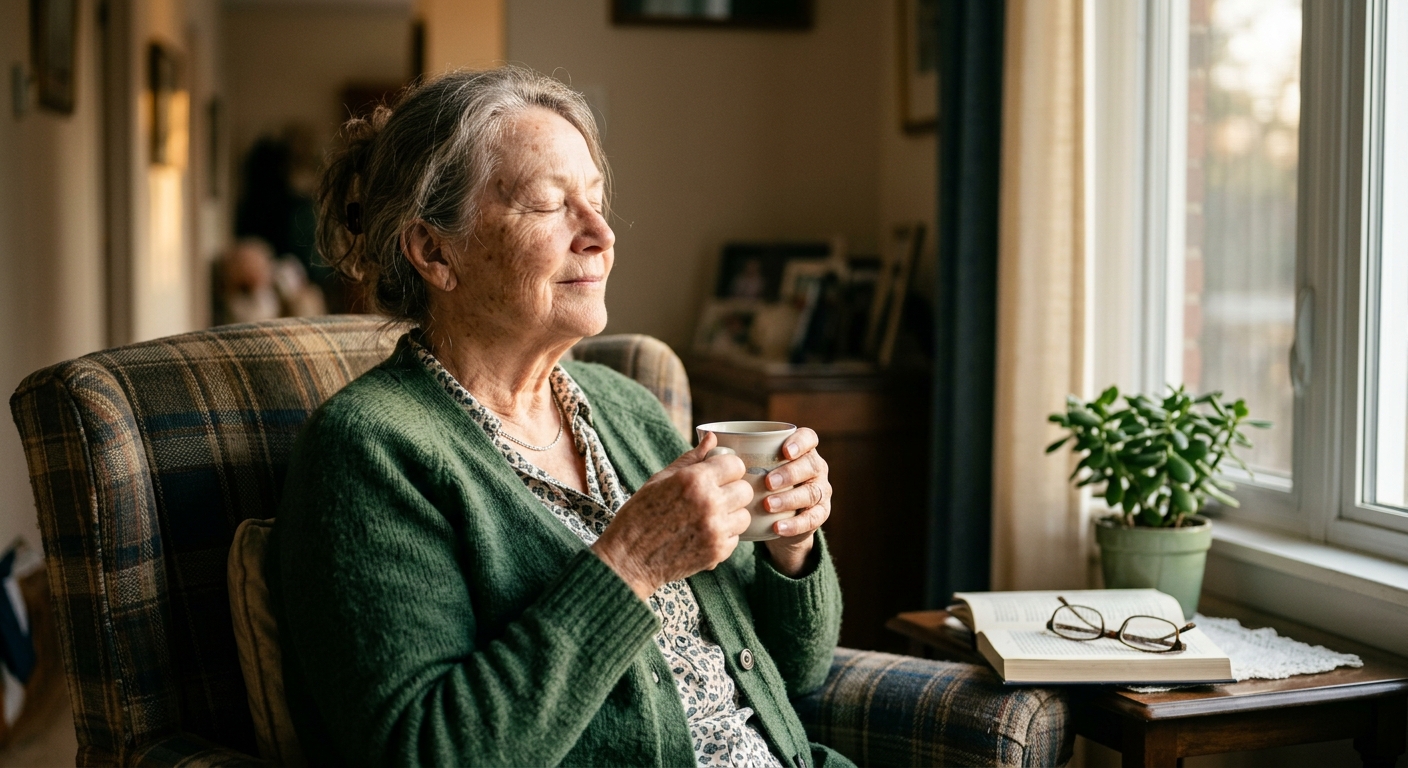
Case in point: after her father’s stroke, my friend Jennifer forced herself to photograph one “good thing” each day. Some days it was as small as a steaming cup of tea in the sunlight or a postcard from an old friend. Weeks later, she realized those moments stitched together an unexpected patchwork of hope.
Research from the University of California, San Diego, in 2023 shows that caregivers who notice and name small joyful moments report less depression and higher feelings of meaning than those who don’t.
You might be wondering how to notice these “micro-joys” when life feels overwhelming. Here are a few practices I recommend:
- Keep a “joy jar.” Write one good thing on a slip of paper each evening, drop it in. Open the jar and read a few on the hardest days.
- Buy a disposable camera ($20-$35) and give yourself a daily photo challenge, something beautiful, odd, or funny in your routine.
Pro Tip: Set a recurring phone reminder labeled “Pause & Notice.” When it goes off, take ten seconds to look around for something to appreciate.
The mistake? Dismissing small pleasures as “not enough.” In difficult seasons, small things are everything, the glue that holds you together. The CDC Nutrition provides detailed guidelines for seniors and caregivers.
Tech Tools and Products That Make Life Easier
Let’s be honest: technology won’t erase your worries, but it can lighten the load if you pick the right tools. Over the years, I’ve tested dozens of products with readers to find out which ones are actually worth your time and money.
One thing nobody warned me about was how caregiving steals your “in-between” moments. The tiny breaths that used to reset you—waiting at a stoplight, folding towels, brushing your teeth—get filled with planning and worry. I’d be in the Target aisle on SE 14th, holding a pack of Depends and trying to remember if Lorraine’s rash cream was the Desitin in the purple tube or the A&D ointment, and my phone would buzz with another reminder. Refill. Appointment. Prescription. When I finally started writing tasks on a paper notepad (a simple yellow legal pad from Staples), it wasn’t about being organized. It was about getting the noise out of my head long enough to sleep.
My Top Recommendations:
- Medication Reminders: GlowCap smart bottle ($40-$50) lights up and sounds an alarm when it’s pill time.
- Voice-Assisted Devices: If your loved one can use a simple “Hey Google” or “Alexa” command, set up reminders or play music by voice (Echo Dot, $30-$50).
- Meal Delivery Kits: Try Home Chef or Silver Cuisine (single servings start at $7, minimum box $35) for healthy, ready-to-heat meals, all designed for seniors’ dietary needs.
- Door and Bed Alarms: If wandering is a risk, Smart Caregiver’s wireless alarm set ($38-$45) helps alert you to movement, peace of mind for caregivers who need sleep.
- Emergency Response Buttons: MobileHelp or Life Alert provide push-button emergency calls. Basic plans start at $29/month, with devices free or $40 upfront.
Pro Tip: Don’t overload on fancy tools you won’t actually use. Choose one or two that solve your biggest headache right now, whether it’s medication management, meal prep, or safety.
People often get caught in “analysis paralysis” shopping for gear. Test one solution at a time and adjust as you go. The most “high-tech” device is useless if it sits in the box.
The Hidden Cost of Not Taking Care: Why It Matters For the Long Haul
You might tell yourself, “I’ll be fine for a little longer,” but over sixteen years of tracking research and listening to families, I can say this: turning a blind eye to your own needs comes at a steep cost.
A 2023 Harvard Medical School review found that chronic family caregiver stress doubles your odds of developing high blood pressure, triggers sleep disorders, and can shave almost four years off your life expectancy. That’s not scare tactics, it’s data.
And there are ripple effects. Sarah, a reader who neglected her own care for five years while helping her father through cancer, eventually ended up hospitalized herself (dehydration and pneumonia, both worsened by constant run-down immunity). Who stepped in? Strangers. Her story has a happy ending, but it was a wake-up call for her, and for many others.
So, reader to reader, I’ll say it plainly: attending to your own body and soul keeps you alive, whole, and truly able to love the ones depending on you.
Pro Tip: Schedule your own annual doctor’s visit and dental exam as a recurring calendar event, then protect that time fiercely.
Mistakes to avoid? Waiting for a “better” season or telling yourself others will be fine if you fall apart. Your loved one needs you well, not just present.
Conclusion: Three Steps Forward, Starting Now
So where do you go from here? Caregiver burnout isn’t a personal failure, it’s a condition that thrives in the dark. But today, you have light.
Here’s my three-step plan you can start this week:
1. Name Your Needs (Today): Spend ten quiet minutes with a notebook, what do you need most urgently? Is it sleep, a real meal, or just an hour outside with fresh air? Write it down, boldly and without judgement. Awareness is the first real antidote to burnout.
2. Ask For (Specific) Help (This Week): Choose one person to contact, and request something clear. Maybe groceries delivered on Thursday. Maybe two hours off on Sunday. Script it out if you need. Remember, support doesn’t mean weakness, it’s the scaffolding for your own well-being.
3. Block Out One “Me Time” Slot (Next 7 Days): Schedule 15–30 minutes, mark it on your calendar in permanent ink. Put on your favorite song, walk around the block, or just stare into space without guilt. Defend that time like a mama bear.
You don’t have to redesign your world overnight. Each small step, taken consistently, creates a new foundation, one where your needs and your loved one’s needs can co-exist, not compete. I’ve seen this work with hundreds of exhausted, brave caregivers just like you.
And, as someone who’s sat at hundreds of kitchen tables, listened to the heartbreak and the hope, I genuinely believe in your strength. Your compassion is your power. But your life matters just as much as the person you care for. Take that first small step. I’ll be cheering you on every inch of the way.
With warmth and hope,
[Your Name],
Health Journalist and Friend to Caregivers
Your Action Checklist
Print this out and stick it on your fridge:
- Book one “no-cancel” appointment for you this week — Put it in your phone as “MEDICAL (DO NOT MOVE).” If cost is the issue, use a $0–$40 cash-pay clinic like CVS MinuteClinic (prices vary) for a basic visit, or schedule a dental cleaning at CPCC’s dental hygiene clinic in Charlotte (often under $50 when they’re taking patients).
- Buy a real pill organizer today, not “someday” — Get the weekly AM/PM one from Walgreens (usually $10–$15). Fill it every Sunday night with the TV on. If you keep “fixing it later,” you’ll be up at 2 a.m. counting tablets. I’ve done that math in my head too many times.
- Set up a $12/month grocery autopilot — Walmart+ (often around $12.95/month) or Instacart+ (pricing varies) so you can reorder the same basics without another store run. Add three “caregiver foods” you’ll actually eat: Fairlife protein shakes, bagged salads, and a rotisserie chicken.
- Pay for one small break on purpose — Hire a vetted sitter for a two-hour block this month. On Care.com in Charlotte I used to see $18–$25/hour. Pick a weekday afternoon. Put it on the calendar. Leave the house. Sitting in your car doesn’t count as “rest” if you’re still listening for a fall.
- Create a one-page “If I’m not home” sheet — Tape it inside a kitchen cabinet: meds list, allergies, baseline confusion level, doctor names, pharmacy (like Harris Teeter Pharmacy), and where the DNR is if you have one. I learned this the hard way after an ER visit where nobody could remember the blood thinner dose.
- Buy two caregiver “save-my-back” tools — A gait belt from Amazon (often $12–$20) and a basic slide sheet (often $20–$35). Use them every time. Not “when you have time.” I hurt my shoulder years ago trying to muscle someone up from a recliner. Pride is expensive.
- Program two numbers into your favorites right now — 2-1-1 (United Way resources) and the Alzheimer’s Association 24/7 Helpline: 1-800-272-3900. Don’t wait for the meltdown night. The first time you call, your voice may shake. That’s okay.
- Start a “burnout budget” envelope — Put $20 cash in it this week. Label it “RESCUE.” Use it only for things that keep you steady: a co-pay, a pharmacy delivery fee, a pre-made meal, gas to get to your own appointment. I used to spend money on everyone else and then act shocked when I had nothing left for me.
Real Story: Denise’s Journey
Denise was 49 and living in east Charlotte, juggling a full-time job and her dad after a stroke. When I met her, she had that tight, jumpy look—like she was always listening for a sound that meant trouble. Her dad, Mr. D, was proud and stubborn. He’d refuse the walker, then try to “prove” he could make it to the bathroom alone. Denise tried doing everything herself: work all day, drive across town, cook, clean, manage meds. She even slept in a chair by his bed for weeks. I wish I could say I talked her out of it early. I didn’t. I let her push because she sounded so determined, and I regret that.
What didn’t work: Denise bought a fancy smartwatch thinking fall alerts would solve it. It didn’t. He hated wearing it. She also tried “powering through” on coffee and skipped her own blood pressure meds. One night she got dizzy helping him up and they both went down—no big injury, but it shook her.
What worked was smaller and real. A $19 gait belt, a bedside urinal to cut late-night trips, and two paid respite afternoons a week at $20/hour. Denise started leaving the house, even if it was just to sit at Freedom Park with a Diet Coke. Three months later, she wasn’t smiling all the time, but her eyes looked like they belonged to her again. Mr. D was safer too.
Leave a Reply