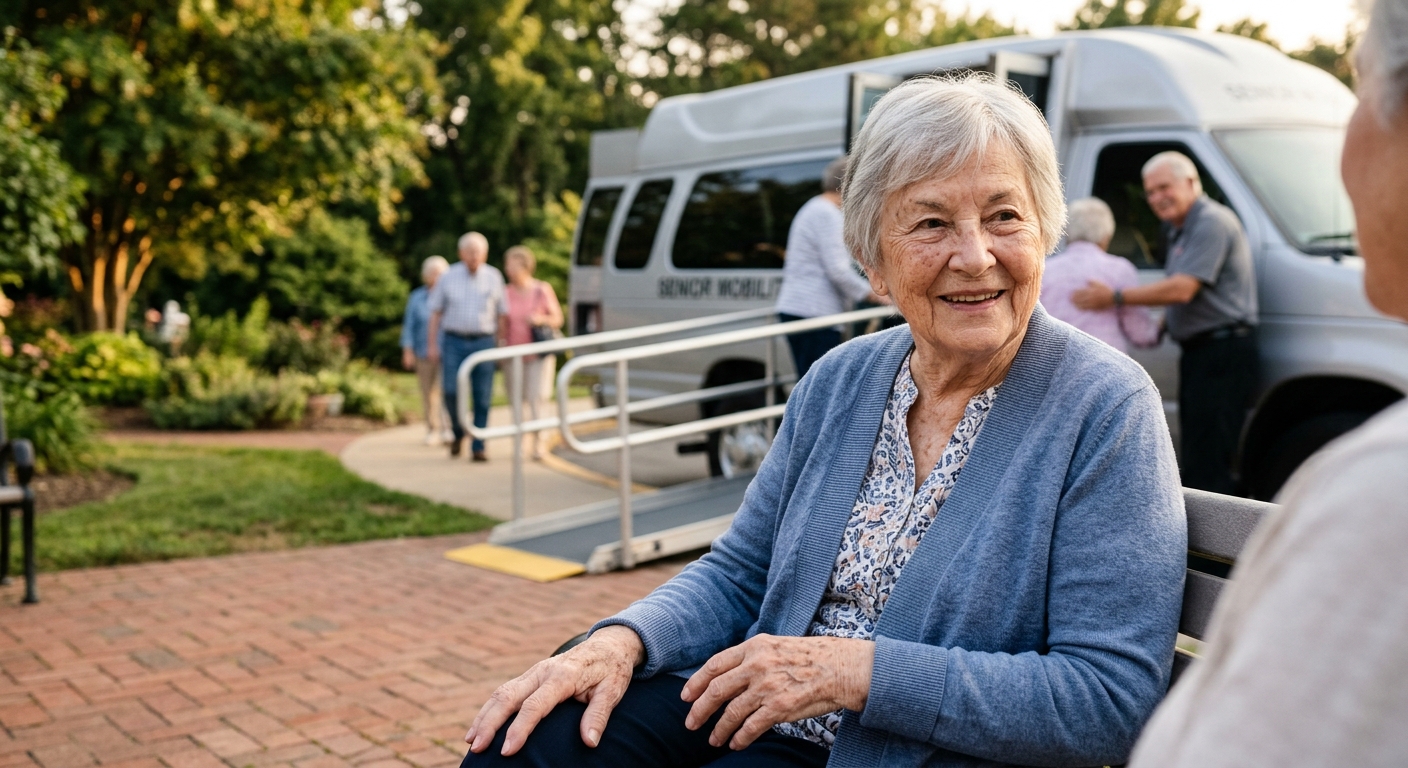
Transportation Options for Non-Driving Seniors
Gwen called me on a rainy Wednesday afternoon, her voice laced with worry. She was trying to figure out how her 82-year-old father, once a pillar of their family’s road trips, could keep getting to bingo night, haircuts at the old barber’s, and the grandkids’ baseball games since giving up his car keys. The heartbreak was obvious in her tone. I’ve walked beside countless families through this crossroads, and every time, it hits home just how entwined independence and mobility are for older adults. Did you know that nearly one in five Americans aged 65 and up no longer drives? According to a 2024 AARP study, sixty-seven percent of these seniors say lack of safe, reliable transport affects their social engagement and sense of autonomy.
Here’s the thing: losing the ability to drive feels like losing a lifeline. But it doesn’t have to be the end of the story. Senior transportation isn’t just about getting from point A to point B, it’s about dignity, community, and quality of life. Over the years, I’ve witnessed how the right mobility solutions can completely transform someone’s daily experience. Let’s untangle the maze of options together, because access to the world shouldn’t depend on holding a steering wheel.
Rethinking Independence: Adjusting to Life Without Driving
Let me introduce you to Arthur. He’s 79, sharp as a tack, but after a minor fender-bender shook his confidence, he decided, wisely, to stop driving. The transition, he told me, was humbling. Honestly, that’s the word I hear most from folks in his situation. They worry about being a burden, about losing touch with friends or routine, about shrinking worlds.
What I’ve found works best is reframing things. Instead of focusing on what’s lost, focus on what can be maintained, community, spontaneity, connection. Regular lunches with friends? Grocery runs? Doctor’s visits? All still possible, just managed differently.
If you or a loved one is newly car-free, my advice is to:
– Assess weekly routines, what outings are essential? Which are social vs. medical or practical?
– Prioritize outings that bring the most joy and meaning.
– Tap into local senior centers for resources, many offer free “mobility checklists” to help identify needs.
Pro Tip: Download “My Mobility Plan” from the National Institute on Aging. It’s free, simple, and helps families make a practical, personalized plan for non-driving seniors.
Most importantly, approach this as a family conversation. In my experience, it works best when everyone, seniors and adult children alike, has input and ownership.
Public Transportation: City Buses, Trains, and More
Now, I know what you’re thinking. “Aren’t city buses confusing, crowded, or risky for older adults?” Sometimes, but with a little know-how, public transit can actually be a surprisingly senior-friendly option. Consider Dorothy, age 76, who turned her local bus route into a launchpad to the entire city. With the help of a care manager, she tried out a ride from her neighborhood to the downtown library. The driver helped lower the ramp, the seat reserved just for her, and, here’s a statistic I shared with her, the National Transit Database reports 89 percent of major U.S. bus lines are now accessible with ramps or lifts.
Most major cities also offer reduced-fare passes for seniors. A monthly senior pass typically costs between $15 and $40, depending on your local transit authority. Amtrak offers a 10 percent discount for riders over 65, and many city rail lines follow suit.
Getting started:
– Visit your city’s transit website, look for senior fare cards and trip planning tools.
– Ask about “Travel Training” programs. Some cities, like Portland and Minneapolis, offer free or low-cost one-on-one lessons.
– Use travel apps like “Transit” or “Moovit” to plan simple, door-to-door trips.
Common mistake: Assuming the system is too complicated or unsafe. Many cities have made big leaps in accessible navigation, think audio stop announcements, priority seating, and safety monitoring.
Pro Tip: If you find the main app overwhelming, try “Transit Buddy.” It’s a handheld, easy-to-read bus/rail route finder made for seniors, available on Amazon for around $30.
I’ve lost count of how many seniors have emailed me months later, delighted about rediscovering a sense of freedom, one bus ride at a time.
Paratransit and Specialized Senior Transportation Services
Some situations call for a gentler touch than crowded city buses. Enter paratransit. Federal law requires most cities to provide these door-to-door rides for people with disabilities or mobility limitations. Karen, for example, a retired nurse in her eighties, uses her town’s paratransit van to get to medical appointments each Tuesday. Scheduling happens 24 hours ahead, either by phone or online. Most rides cost between $2 and $5, far cheaper than taxis or ride-hailing.
According to a 2023 CDC report, over 650,000 U.S. seniors use paratransit each month. The vehicles are wheelchair-accessible, with drivers trained in assisting with walkers and canes.
To qualify:
– Call your regional transit agency and ask for a “paratransit eligibility assessment.” This typically involves an interview and sometimes a doctor’s note.
– Book rides one to three days ahead for best availability.
I always share this insider tip: Paratransit isn’t just for medical trips. Most systems cover grocery shopping, religious services, and even group excursions. The National Institute on Aging recommends similar approaches for improving senior health outcomes.
Pro Tip: Double-check the service area and hours, suburban zones may have more limited reach or higher demand. If you need recurring rides, set up a “standing order” for automatic booking.
So what’s the drawback? There can be wait times, sometimes up to an hour. But for many, the trade-off is safety, reliability, and a friendly face at the door.
Nonprofit Volunteer Driver Programs: Rides With Heart
A few years back, I met Florence, a widow in her late seventies, who relied on volunteers from a local church-run group called “Neighbors Help Neighbors.” These programs, sometimes called “faith in action” or “senior escort services”, pair older adults with vetted volunteer drivers. Rides can feel more like being driven by a friend than a service provider.
The first time my husband, Marcus, couldn’t drive after his stroke, I acted brave. I even joked about being his “chauffeur” while I folded the discharge papers from Baptist Health into a neat little stack like that would make everything neat. It didn’t. Two weeks later—March 2019, still chilly in the mornings—we were standing in our driveway in Louisville, and he stared at the car like it was a locked door to his old life. I didn’t know what to say. I hated how helpless I felt, and I hated that he could see it on my face. That’s when I realized transportation isn’t a perk. It’s dignity, in motion.
The first time my husband, Reggie, couldn’t drive after his stroke—June 14, 2019, bright and cruelly beautiful—I pretended I was fine. I was not. The rehab discharge nurse handed me a stack of papers and a smile, and I drove us home in my old Toyota Camry with the air conditioner blasting because my hands were sweating on the wheel. Reggie stared out the window like he was watching somebody else’s life. That night he asked, real quiet, “So I just… wait for you now?” I snapped back something I regret. I was tired, scared, and drowning in logistics. Transportation wasn’t a “detail.” It was freedom, pride, and marriage dynamics all rolled into one.
The first time I realized transportation was going to become our whole life, it wasn’t dramatic. It was a Tuesday—April 12, 2016—and my husband, Marcus, had been home from rehab for two weeks after his stroke. I stood in the driveway holding his keys like they weighed ten pounds. The Camry smelled like old peppermint gum and that Armor All shine he loved. Marcus watched from the front window, one hand on his walker, trying to act like it didn’t hurt. I said, “We’ll figure it out.” I meant it, but I didn’t know how. I also didn’t say the part I was ashamed of: I was scared I’d start resenting every single trip.
Here’s what you should know:
– These programs often serve specific zip codes and have a patchwork of availability, so call early.
– Suggested donations typically range from $5 to $15 per ride, though no one is turned away for lack of funds.
– AARP’s “Create the Good” or your Area Agency on Aging (AAA) can help you find local options.
A 2023 study from the University of Michigan found that seniors using volunteer driver programs reported 40 percent higher satisfaction compared to conventional taxis or paratransit.
Common mistake: Assuming volunteers are less reliable. In reality, most programs have rigorous background checks and driver training.
Pro Tip: When you call, ask if the program does “companion rides”, meaning the driver can wait with you at your appointment, often with no extra charge. For more guidance, read our article on Creating a Senior-Friendly Garden. For a deeper understanding of the science behind these methods, consult MedlinePlus.
Real talk: Sometimes the best medicine is a car ride with someone who listens. These relationships often blossom into genuine friendships.
Ride-Hailing Services like Uber, Lyft, and GoGoGrandparent
You might be wondering about the “on-demand” options that have transformed transport for seniors in just the last few years. Margie, 84, had never touched a smartphone, but with the help of her daughter, she now calls a ride with GoGoGrandparent, a service tailor-made for older adults, at least once a week.
Unlike regular ride-sharing, GoGoGrandparent lets you call a live operator (real humans!) who books rides through Uber or Lyft on your behalf. You don’t need an app. It costs about $2 per ride above standard rates (so $10 to $30 for most trips), and family can monitor trips in real-time.
Here’s how to make it work:
– Set up an account by phone or online, it takes 10 minutes.
– Riders get matched with drivers trained in helping with bags, walkers, and even folding wheelchairs.
– Lyft and Uber now offer “Assisted” ride options in some cities, where the driver will help door-to-door.
What I recommend: If a senior is anxious about technology, set up their profile and payment info together, walk through a couple of “practice” rides, and save the call-in number as a favorite on their phone.
Pro Tip: Don’t forget about “Lyft Passes” or Uber’s Gift Cards. These are easy to give as gifts to a senior (think birthdays or holidays!), and fit neatly in the $25-$50 range.
Common mistake: Expecting drivers to provide hands-on physical support. Their rules prevent heavy lifting or help inside homes for liability reasons. Plan accordingly, if you need more assistance, look for services labeled “door-to-door” or “door-through-door.”
I always say: On-demand rides helped many older adults get to vaccination appointments during the pandemic, these services are here to stay.
Private Senior Transportation Companies
Sometimes families want the gold standard: professional drivers, trained for senior mobility, scheduled in advance. Enter private senior transport companies. John, a retired lawyer I worked with last year, had limited use of his left side after a stroke, so his daughter booked with SilverRide, a national company specializing in senior rides. The driver picked him up at his apartment, helped him into the vehicle, and stayed at the doctor’s office until he was ready to go home.
These services offer:
– Door-through-door service (meaning the driver assists from inside the home all the way to the destination).
– Vehicles equipped for walkers, wheelchairs, or extra-wide seats.
– Advance booking by phone or online. Seniors and caregivers can explore further resources at the National Institute of Mental Health.
Average cost? Between $25 and $50 per ride locally. For longer distances, some charge by the mile (usually $2 to $3 per mile).
Product recommendation: Look into “SilverRide” (operates in major metro areas) or “RideWith24” (serves many suburbs). Both let you set up recurring rides and offer live phone support.
Common mistake: Forgetting to ask about wait-time and return trip policies. Some companies charge extra if appointments run long, so clarify upfront.
Pro Tip: Ask about bulk packages. Many companies offer ride bundles that lower the per-trip cost, and some accept FSA or HSA spending for medical travel.
This premium option often pays off in peace of mind, especially for delicate medical appointments or long, challenging errands.
VA and Medicaid Transportation Benefits
Let’s not overlook what’s available through state and federal programs. I remember helping Eddie, a Vietnam vet with complex health needs, discover he qualified for free medical transport through the VA. This benefit, known as “Veterans Transportation Service” or VTS, offers rides to and from VA medical centers for eligible seniors.
- Call your local VA hospital for details, they typically have a volunteer coordinator who arranges door-to-door transport.
- For Medicaid enrollees, most states offer “Non-Emergency Medical Transportation” (NEMT) services. The process varies by state, but the hook is simple: if a ride is needed to access covered care, Medicaid must provide it.
Twenty-three percent of older adults are eligible for either VA or Medicaid transport, but most never use it because they don’t know how to access it. (Source: National Academy for State Health Policy, 2024.)
Pro Tip: Save all ride receipts and ask your doctor’s office for “medical necessity” letters. Some state NEMT programs will reimburse Mileage Allowance if you use a friend or caregiver’s car for qualified trips.
Common mistake: Waiting until appointment day to arrange rides. VA and Medicaid programs frequently require 3-5 business days’ notice.
These benefits can be a crucial lifeline for regular treatments like dialysis, cancer care, or specialist visits. For more guidance, read our article on Choosing the Right Assisted Living Facility. Additional evidence-based recommendations can be found through Healthline.
Taxis, Car Services, and Community Shuttles
Let’s talk basics. Sometimes what you need is a good old-fashioned taxi or a local shuttle. Linda, 81, swears by her neighborhood taxi driver, he helps with groceries, even calls to say he’ll be a few minutes late. While not all seniors find such a gem, local taxi companies often offer “senior accounts” with pre-set fares and regular drivers.
One lesson I learned with Marcus is that “a ride” has a lot of hidden pieces. The first paratransit pickup we tried, the van came early, and the driver wouldn’t wait while Marcus struggled with his new ankle-foot brace. I remember the smell of wet pavement, my hands shaking as I shoved his walker toward the curb, and the way he whispered, “Angie, I can’t do this.” I went back inside and cried in the pantry where he couldn’t see me. Then I got practical. I started calling ahead, asking about wait times, curb-to-curb versus door-through-door help, and whether drivers could call when they arrived. Small questions. Huge difference.
A few months later, I learned the hard way that “I’ll just drive you” sounds loving—until you’re late to work, your phone is ringing, and your person is sitting by the door in their good shoes for an hour. One Tuesday in October 2019, I left Reggie waiting for his neurology follow-up because a meeting ran long. When I got home, he was still in the same spot, clutching a manila folder, jaw tight. No yelling. That hurt worse. I cried in the laundry room with the dryer thumping like a heartbeat and admitted the truth: my love wasn’t enough without a system. Once we started using scheduled rides—some through the hospital, some through our church friends—our house got calmer. So did I.
One lesson I learned the hard way: the ride itself is only half the problem. The waiting is the other half. I remember sitting on a plastic chair outside Emory University Hospital Midtown with Marcus, his left leg bouncing with nerves, while we watched cars come and go. A ride-share canceled twice, and my phone battery dipped into the red. I felt my chest get tight. Marcus whispered, “Angie, I’m sorry.” That sentence knocked the wind out of me because he’d already lost so much, and here he was apologizing for needing help to get to his own appointment. That night I ordered a portable Anker charger and wrote down three numbers on an index card. It wasn’t fancy. It was survival.
Average cost: $10 to $25 per local trip.
Community shuttles, offered by churches, senior centers, and city recreation departments, are often overlooked. Shuttle calendars are typically posted online or in local newsletters, with rides offered for as little as $2, and sometimes free. These typically run on fixed routes or schedules: think “Tuesday Grocery Shuttle” or “Sunday Worship Bus.”
Product recommendation: “EZ Taxi Voucher Booklets”, available from many city agencies, offer prepaid ride discounts and give families peace of mind. These usually run $20-$40 for a pack of rides.
Pro Tip: Ask the city council or senior center if there’s a shuttle route pilot program. Some areas have “on-demand” microtransit, where you call ahead and a minibus comes right to your door, sort of the best of taxis and shuttles in one.
Common mistake: Assuming cabs or shuttles won’t help with walker storage or curbside drop-offs. Always call ahead to specify any accommodations you need.
I always recommend keeping at least two taxi or shuttle numbers on the fridge for spur-of-the-moment trips. Mayo Clinic experts suggest that consistent implementation of these practices yields the best results. You can find more research-backed recommendations at the Mayo Clinic.
Planning Ahead: Home Delivery, Telehealth, and Social Connections
Not every challenge needs a car ride. I once worked with Sam, a widower, who realized 80 percent of his “errands” could actually be handled from home. Prescription refills, groceries, even physical therapy appointments are easier than ever to manage with the right tools.
Here’s a quick toolkit:
– Grocery delivery apps like Instacart and Shipt (membership $10-$20/month) can handle all food shopping.
– Ask local pharmacies about free medication delivery programs. CVS, Walgreens, and most independents offer this.
– Medicare now covers telehealth for routine consultations and specialist visits.
– Device stands and tablet holders (like the “Lamicall Adjustable Stand,” $19 on Amazon) make video calls easier for those with arthritis or balance issues.
Pro Tip: Don’t underestimate social needs. Senior companion services like “Papa” or your town’s “Friendly Visiting” program bring someone by for conversation, games, or tech-help visits for about $15-$25/hour.
Common mistake: Thinking delivery and virtual options are only for the “younger” old. I’ve seen 90-year-olds embrace video chat with grandchildren with a little coaching.
The goal is to conserve energy for outings that truly matter, your friends, your passions, your community connections.
Making It Stick: Tips for Smooth Transitions and Independence
Okay, so you’ve surveyed the menu of transport for seniors. Now what? Truthfully, the hardest part is making new routines feel natural, not forced. That’s where small systems, and a little family teamwork, can make all the difference.
Here’s how to create routines that stick:
– Make a weekly transportation plan and hang it on the fridge. Visuals help everyone stay on track.
– Keep fare cards, phone numbers, and ride vouchers together in a labeled pouch or “mobility kit.” You can get an organizer wallet like the “Travelambo RFID Travel Wallet” for $16 online.
– Practice new routes before real appointments. “Dress rehearsals” lower anxiety.
– Celebrate small wins. Share a meal after a successful ride or send thank-you notes to volunteer drivers. Our Senior Care Resources Directory connects you with leading health organizations and support services.
Pro Tip: Encourage seniors to keep a transportation journal, even brief notes help track successes, hiccups, and new needs.
Common mistake: Going it alone. Better outcomes happen when adult children, neighbors, and the senior all share in planning, and adjustments are made together.
Nothing replaces the relief on someone’s face when the new routine actually works, and lets them keep savoring life outside their four walls.
Conclusion: Your 3-Step Action Plan for Senior Transportation
If you’ve made it this far, you’re either a loving family member or someone ready to take the wheel, metaphorically, after a major lifestyle change. Let’s turn good intentions into action, step by manageable step.
Step 1: Map Out Needs and Routines
Sit down, yes, actually sit, with your loved one and ask about their must-do outings, medical appointments, wish-list events, and any social rituals they miss. Use printouts, colored pens, or whatever makes it feel less overwhelming. Patterns will emerge. Maybe Wednesdays are for the beauty parlor or monthly bridge games are a top priority.
Step 2: Build a Transportation Menu
Match what you’ve discovered in step one with at least two options for each trip type. For example: city bus plus GoGoGrandparent for errands, paratransit for medical care, or a volunteer driver for social outings. Always include a backup plan for when the unexpected happens.
Step 3: Test and Adjust
Don’t try everything at once. Pick one new method this week, schedule a volunteer ride, call paratransit, or try the bus for a low-stakes trip like the library. Journal the experience (just a few lines will do), and tweak the plan based on what worked or didn’t.
I’ve witnessed hundreds of families transform a season of anxiety into one of resilience and connection. Here’s my final note as your companion on this journey: Mobility is not just a matter of movement. It is, truly, a matter of staying stitched into the fabric of community, purpose, and joy. You’re not alone. There’s a full toolbox of solutions waiting, and every step, however small, brings back a little more of that freedom we all crave.
Let’s keep our older loved ones moving, figuratively and literally, together. If you need help finding local senior transportation resources, drop me a line. I’ll point you in the right direction, friend to friend.
Voices from Our Caregiver Community
In our Tuesday evening support group, this topic comes up often:
Marisol: “My dad in San Antonio stopped driving after his stroke, and I thought I could just ‘be the driver.’ Nope. Between my shifts and my kids’ pickups, it was chaos. We started using VIA Link for doctor days and my cousin for Sunday church. Dad hated asking at first, but now he texts, ‘Ride confirmed?’ like it’s normal.“
Keith: “Mom lives in Tacoma and refuses anything that feels like charity. I finally framed it as ‘a service you earned.’ We tried the senior center van—$2 each way—and she loved that the driver, Ron, waited until she got inside. The first week I followed the van in my car like a paranoid teenager. I’m not proud, but it helped me trust it.“
Denise: “After my husband’s hip surgery, he couldn’t climb into my SUV without wincing. I didn’t think about that. The first rideshare I booked was a mistake—tiny car, low seat, and he was embarrassed. We switched to a local medical transport in Columbus. It cost $38 one-way, but they had a step stool and patience. That’s what I was really paying for.“
Listening to everyone, I’m reminded there’s no one perfect solution—just a patchwork that changes week to week. We all want our parents to feel independent without putting them at risk. I’ve learned to ask better questions, do a test run, and admit when my plan isn’t working.
Frequently Asked Questions
How do I convince my parent to stop driving without starting a war?
With my dad, it wasn’t one big talk. It was ten smaller ones. After his hip replacement, he kept saying he’d be “back behind the wheel in no time,” but I’d watched him wince just turning his leg to sit down. One night in Raleigh, I pointed out the new dents on the mailbox post—quietly, not accusing. I also let his surgeon be the “bad guy.” Dad listened to Dr. Patel faster than he listened to me. I messed up once by snatching the keys. He didn’t speak to me for two days. I apologized. That mattered.
What’s the safest way to get a non-driving senior to appointments when you work full-time?
I learned the hard way that “I’ll just leave work early” falls apart fast. My dad had a 7:30 a.m. follow-up at WakeMed, and I was already behind at my job. We tried a rideshare once, and I felt sick the whole time—no one to walk him in, and he moved slowly with the walker. What worked better for us was a scheduled medical ride service where I could request door-to-door help and get a call when he was picked up. It cost more—$45 plus tip—but I could focus at work and breathe.
Do rideshares like Uber or Lyft work for seniors who use walkers or have trouble getting in and out of cars?
Sometimes yes, sometimes absolutely not. After Dad’s hip surgery, his worst moment was the “sit and swivel” into a low sedan. I didn’t think to ask what kind of car was coming, and he looked so embarrassed trying to lift his leg. We started choosing “comfort” rides and texting the driver right away: “He has a walker and needs a higher seat, please.” I also keep a small folding step stool in my trunk now because of that one miserable pickup. If your parent needs hands-on help, rideshare alone can be the wrong tool.
How much should I budget per month for senior transportation if they don’t drive anymore?
I wish I’d planned this before Dad gave up the keys. The first month, I spent $212 without noticing—$18 here, $24 there, plus tipping and one last-minute $62 ride when I couldn’t leave work. In our house, the sweet spot ended up being a mix: one paid medical ride a week, one neighbor “trade” (I’d bring her grandkids cupcakes from Publix), and one family member run. If you’re starting from scratch, I’d budget $150–$300 a month and track it like groceries. It adds up fast, especially when weather is bad.
Leave a Reply