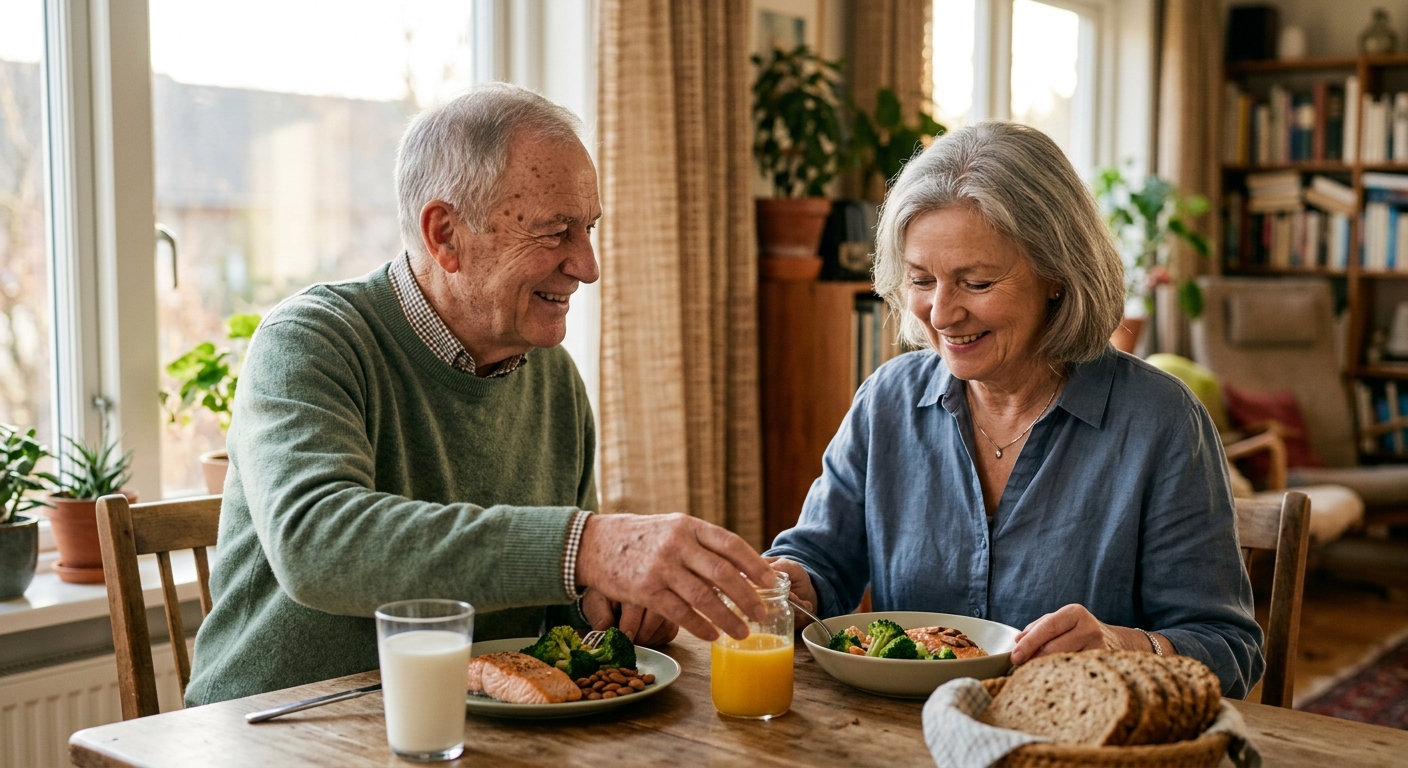
I remember the phone call as if it happened yesterday. Margaret, a vibrant 72-year-old reader from Connecticut, had slipped in her tiny kitchen, reaching for a mug in her cabinet. She broke her wrist. She told me, half-laughing and half-embarrassed, “My grandson has steadier bones than I do!” She was just one of hundreds of older adults I’ve spoken with over the years who worry about brittle bones and falling. It was the third fracture she’d experienced in six years, and she was tired of feeling fragile. That call stuck with me.
Here’s the thing: Margaret’s story isn’t unusual. About one in two women and one in four men age 50 and older will break a bone because of osteoporosis, according to the National Osteoporosis Foundation. The statistics are sobering. In my years of reporting on senior health, I’ve seen time and again how the right nutrition, specifically enough calcium and vitamin D, can rewrite this story. I’ve witnessed seniors regain confidence, strength, and independence simply by making a few changes to their routines.
So, what stands between you or your loved one and a less fragile future? Sometimes, it’s just a glass of milk and a few rays of sunshine. But often, it’s a little more complicated than that.
Let’s walk through the realities, the myths, and the solutions. I’ll share advice from my own experience, the latest research, and stories from families like yours. You deserve to feel strong, steady, and in control.
—
For more on this, see our article on understanding osteoporosis in senior women.
Why Bone Health Nutrition Matters More After 65
I had coffee once with a retired nurse named Lou, 68, who’d never paid much attention to her bone health nutrition until she fell carrying groceries into her house. “I thought falls were for people older than me,” she confided. It’s a conversation I’ve had countless times. Bones are living tissue. And just like us, they lose density as we age.
But why do calcium and vitamin D become so crucial after 65?
Let’s break it down. Older adults tend to absorb less calcium from their food, mainly because our stomachs produce less acid, which is necessary for proper calcium absorption. Vitamin D, which helps the body use that calcium, becomes harder to get from sunlight as our skin becomes less efficient at making it. So even the best diet might not be enough if you’re not mindful.
For more on this, see our article on essential nutrition tips for seniors.
Here are some hard truths:
– Americans over 65 are the most likely group to be hospitalized for a bone fracture
– Osteoporosis costs the health system over $19 billion yearly, according to the National Osteoporosis Foundation
– Bone loss accelerates rapidly after menopause in women, and men begin to catch up after age 70
Bones aren’t just a frame. They’re protection for your heart, brain, and mobility. When your bones are strong, you move with confidence and lower your risk of life-changing injuries.
Pro Tip: Before making major dietary changes, always ask your healthcare provider for a bone density test (DEXA scan). You might be surprised by what you learn.
—
How Much Calcium Seniors Really Need, and Where To Get It
One mistake I’ve seen too often: chugging calcium supplements without any strategy. That’s not the way. When I worked with an assisted living community in Ohio, I met Evelyn, 80, who was taking a double dose of calcium chews every morning. She ended up with painful kidney stones. That’s not uncommon. More isn’t always better.
The National Institutes of Health recommends that women over 50 and men over 70 get about 1,200 mg of calcium per day. But it’s not just about numbers. It’s about sources.
Top food sources:
– Dairy: 8 oz of milk or yogurt (around 300 mg)
– Fortified plant milks (soy, almond): 300 mg per cup
– Canned sardines or salmon with bones (325 mg in 3 oz)
– Collard greens, kale, or bok choy (150-250 mg per cup, cooked)
– Calcium-set tofu (up to 861 mg per half cup)
Pro Tip: Spread your calcium throughout the day. The body only absorbs about 500 mg at a time.
If you’re lactose intolerant or just not a dairy fan, focus on plant-based sources and check labels for calcium fortification. A fortified orange juice, for example, often has the same calcium as a glass of milk.
What about supplements? In my experience, food first is the gold standard, but some people do need a pill. If you go this route, stick with calcium citrate (better absorption, particularly if you have digestive difficulties). Look for trusted brands like Citracal (about $12-15 per 100 tablets). That’s far cheaper, and safer, than a trip to the emergency room.
Common Mistake: Taking all your calcium in one gulp or mixing a supplement with a meal high in iron can block absorption. Space them out.
—
Vitamin D for the Elderly: Why It’s More Than Just “The Sunshine Vitamin”
I once ran a mini-survey among readers and was stunned. Most thought sitting by a sunny window would get them enough vitamin D. Actually, glass blocks the UVB rays needed for vitamin D production. This is a classic misunderstanding, and it’s dangerous. You can find more research-backed recommendations at the AARP Estate Planning.
Vitamin D does more than help your body absorb calcium, it also supports muscle function, immune response, and even mood. I recall Joan, age 77, who was active and ate well but still felt weak and achy. Her doctor discovered a serious vitamin D deficiency. Once she began taking a proper supplement (after checking her blood levels), her energy and stability improved dramatically. For additional reading, the Alzheimer’s Association has published extensive resources on this subject.
The National Institutes of Health recommends 800 IU daily for adults over 70. Here’s the kicker: very few everyday foods provide enough. The best sources are:
– Fatty fish, like salmon and mackerel (450 IU per 3 oz)
– Fortified milk or plant milks (up to 130 IU per cup)
– Egg yolks (35 IU per large egg)
Pro Tip: Look for vitamin D3 (cholecalciferol) over D2 when choosing a supplement. D3 is more effective for raising your levels. Reliable brands like Nature Made D3 (1,000 IU, $8-10 for a three-month supply) are widely available.
Sunlight certainly helps, but skin aging and sunscreen use both block production. Try to get 10-15 minutes of midday sun on your arms and legs a few times a week, if your doctor says it’s safe. But don’t rely on this alone, especially in winter.
Common Mistake: “I eat eggs for breakfast, so I must be fine.” Sorry, diet alone rarely gives the elderly enough vitamin D.
—
The Surprising Connection Between Bone Health and Falls in Seniors
Jim, a steady 82-year-old Midwesterner I met at a senior center, insisted, “I haven’t fallen in years. I walk every day!” Then one icy January, he slipped taking out his trash and fractured his hip. What stunned him (and sometimes surprises doctors, too) was that even a mild stumble could cause such a break. That’s the cruel punchline when bones are brittle: minor slips can lead to major consequences.
Let’s talk numbers. According to the CDC, one in four older adults falls each year, and falling once doubles your chances of falling again. Hip fractures, in particular, are serious: about 300,000 Americans over 65 are hospitalized with one each year, and many never return fully to their previous independence.
What I tell families is this: optimizing calcium and vitamin D is non-negotiable, but it’s only part of the picture. You must also:
– Remove tripping hazards around the home (loose rugs, cluttered hallways)
– Install grab bars in bathrooms
– Make sure shoes fit snugly and have non-slip soles For more guidance, read our article on Creating a Senior-Friendly Garden. For more guidance, read our article on Skin Care Tips for Aging Skin.
Pro Tip: Get your vision checked every year. Poor eyesight is a hidden culprit in many falls.
When nutrition supports solid bones, and your environment supports safe walking, you greatly reduce your risk. For a deeper understanding of the science behind these methods, consult Healthline.
Common Mistake: Ignoring little aches and pains, or letting “pride” get in the way of using a cane or walker. Tools are just that, tools for freedom, not weakness.
—
Calcium, Vitamin D, and Medications: Watch for Hidden Interactions
When I visited Helen, 76, in her senior apartment, we walked through her pill organizer. She took eight prescriptions, including a thyroid pill and a multivitamin. What she didn’t realize was how timing her calcium poorly could lower her thyroid medication’s effectiveness. She felt tired and foggy, not from getting older, but from a drug interaction.
Calcium and vitamin D can both change how your other medications work. Here are a few examples:
– Thyroid meds: Calcium can lower the absorption of levothyroxine. Take at least four hours apart.
– Heart drugs (like digoxin): Too much calcium can increase the risk of dangerous heart rhythms.
– Certain diuretics: Can raise blood calcium levels unnaturally.
Nobody loves reading the fine print on pill bottles. But every pharmacist I know says seniors should double-check their supplement and medication timing.
Pro Tip: Keep an up-to-date medication list (including all vitamins and minerals) in your wallet or phone, and review it at every doctor’s visit.
Common pitfall? Relying only on your own memory or “what you’ve always done.” Talk to your doctor, and never hesitate to ask, “Should I take this at the same time as my calcium?” Sometimes a small change in schedule makes all the difference.
—
Bone-Boosting Meal Ideas for Everyday Life
Nothing brings families together like food. I once hosted a recipe swap with a group of retired teachers, and we built a little “strong bones” cookbook. The winners were meals that were simple, tasty, and full of calcium and vitamin D. Now, I always tell my readers: don’t overthink your nutrition! It’s easier (and tastier) than it seems.
Try these meal ideas:
– Breakfast: Scrambled eggs with sautéed spinach and mushrooms, plus a glass of fortified plant milk
– Lunch: Sardine salad over mixed greens with cherry tomatoes and orange wedges
– Snack: Greek yogurt with chia seeds and fresh berries
– Dinner: Baked salmon, roasted broccoli, and quinoa with a side of sautéed kale
Check the labels when you shop. Choose cheeses and yogurts that are fortified, or look for plant-based alternatives with added calcium and vitamin D. Seniors and caregivers can explore further resources at the National Institute on Aging.
Pro Tip: Boost your calcium absorption by pairing calcium-rich foods with foods containing vitamin C, like oranges, bell peppers, or strawberries. Healthcare professionals at the National Institute on Aging have published helpful guidelines on this topic.
And if you’re not a kitchen whiz? There’s no shame in using convenience products like fortified cereals or calcium-fortified orange juice (about $3-4 per half-gallon). What matters is finding a doable routine that sticks.
Common Mistake: Relying on calcium chews or gummies as a permanent solution. These are supplements, not substitutes for real food.
—
Exercise: The Missing Link in Stronger Bones After 65
If I had a dollar for every senior who told me, “I can’t exercise, my bones are too weak!” I could fund a year’s worth of bone density tests. Here’s what I want you to know: movement is not just allowed, it’s essential for healthy bones. In fact, bones adapt to the stresses we place on them. It’s called remodeling. The right activity tells your body, “Keep these bones strong!”
Mary, 79, began with short walks down her driveway. We added light resistance bands, like a set from TheraBand (about $15-20), to her routine. Three months later, not only did her DEXA scan improve, but she felt steadier and more self-assured carrying groceries.
What works best?
– Weight-bearing activities: brisk walking, stair climbing, dancing
– Resistance training: using light dumbbells or bands
– Balance exercises: simple yoga or tai chi moves
Pro Tip: If you have osteoporosis or a high fracture risk, avoid high-impact activities and talk to a physical therapist about safe, tailored routines.
National Institutes of Health studies show that regular exercise can reduce the risk of hip fractures by up to 40 percent. The more consistent you are, the bigger the payoff. Aim for at least 30 minutes most days, but even 10-minute bursts help.
Common Mistake: Skipping exercise entirely due to fear of falling. In reality, targeted movement actually reduces your risk and helps you maintain independence longer.
—
The Role of Protein and Magnesium in Bone Health Nutrition
I remember talking to Carl, 84, who religiously tracked his calcium intake but overlooked protein and magnesium. He was doing half the work. Bones aren’t just calcium crystals; they’re living tissue, built from a matrix of minerals and protein. Ignore either, and the structure suffers.
For older adults, the recommended daily protein intake is at least 1.0-1.2 grams per kilogram of body weight. For a 150-pound person, that’s around 68-82 grams daily. Sources include eggs, lean meats, beans, and dairy. For more guidance, read our article on Transportation Options for Non-Driving Seniors. For more guidance, read our article on Financial Planning for Long-Term Care.
Magnesium helps turn vitamin D into its active form. Low magnesium levels can actually make your vitamin D supplements much less effective. Top magnesium sources include:
– Almonds (80 mg per ounce)
– Spinach (78 mg per ½ cup, cooked)
– Black beans (60 mg per ½ cup)
– Whole grains Community health programs endorsed by MedlinePlus have shown measurable improvements.
Pro Tip: Many multivitamins for seniors (around $8-15 per bottle) provide magnesium, but you still need magnesium-rich foods daily.
Boosting protein and magnesium is especially important during recovery from fractures or surgery, as they help bone and muscle repair. Ask a dietitian for a simple meal plan if you’re unsure where to start.
Common Mistake: Focusing solely on the numbers for calcium and vitamin D, and forgetting about the supporting cast.
—
Calcium, Vitamin D, and the Realities of Living on a Budget
When I spoke with Clara, a 73-year-old retiree living on Social Security, she held her grocery list close. “How can I afford all these special foods?” she asked. It’s a fair question. I’d argue it’s one of the biggest obstacles seniors face in prioritizing bone health nutrition.
Good news: You don’t need fancy foods or spendy supplements to build strong bones. Here are a few shortcuts:
– Canned salmon and sardines with bones are usually under $2 per can and pack a calcium punch
– Fortified soy milk often costs less than cow’s milk and keeps longer in the fridge
– Generic calcium and vitamin D supplements are as effective as name brands. Target and Walmart’s “up & up” or “Equate” options cost about $4-8 for a three-month supply
Check local food banks or community centers for low-cost cooking classes geared toward seniors. Many offer free bone-healthy recipe booklets or group shopping trips. I’ve seen the sparkle in someone’s eyes when they discover a nutrition tip that fits their budget and their lifestyle.
Pro Tip: If you qualify for SNAP (Supplemental Nutrition Assistance Program), you can use benefits to buy most fortified foods, including plant milks and canned fish. For further guidance, the Medicare.gov offers comprehensive resources on this topic.
If you’re supporting an older adult in your life, consider cooking together once a week to batch-prep hearty, nutritious meals. Not only does it save money, but the connection is just as nourishing. The World Health Organization provides detailed guidelines for seniors and caregivers.
Common Mistake: Assuming “healthy eating” always means expensive or obscure foods. Some of the most affordable options are also the most nutrient-dense.
—
Navigating Myths and Misinformation About Bone Health Nutrition
The other day, a reader sent me a printout touting a “miracle bone cure” that involved little more than vinegar and water. These fads crop up constantly. As your trusted source, I’ve sifted through decades of hype. Let me set the record straight.
Here are a few myths I see most often:
– “Only women need to worry about bone loss.” Not true. While it’s more common in women, men lose density, too, just at a different rate.
– “Supplements alone will fix my bones.” False. You need a combination of good food, safe sun, and movement.
– “If I don’t feel sick, I must be fine.” Osteoporosis is a silent process. Most people don’t feel symptoms until they have a fracture.
Case in point: Charles, an 82-year-old former marathon runner, felt healthy, until a routine scan revealed “severe” bone loss. Because he got that diagnosis early, he did a full turnaround with his diet, started regular walks, and now swears by his daily yogurt breakfast and a bit of sunlight in the garden.
Pro Tip: The only way to know your true bone status is through a professional scan and blood work, not what you read on a supplement bottle or magazine cover.
Be wary of “quick fixes” and miracle supplements, especially those costing more than $25-30 a month or not carrying the USP (United States Pharmacopeia) or NSF International seal. Real bone health takes time, consistency, and a dash of patience.
Common Mistake: Trusting big claims on small bottles, or delaying action until after a fall. Prevention is your strongest ally.
—
Your Stronger Bones Action Plan: Three Steps to Take Today
After seeing so many families worried, overwhelmed, and even scared by the risk of osteoporosis, I know that information is only as good as the actions it inspires. What matters most is taking a first step, no matter how small. Here’s what I recommend, drawing on both research and real-life stories that have stuck with me.
Step 1: Get Your “Bone Status” Baseline
Call your doctor and request:
– A bone density test (DEXA scan) to objectively measure your risk
– Simple blood work to check vitamin D levels
This will arm you with facts, not just guesswork, about where you stand. Like with Charles, knowing your numbers means you can make targeted change.
Step 2: Build a Simple, Sustainable Daily Routine
Choose two or three habits to commit to, don’t overhaul your life all at once. For example:
– Add a cup of fortified plant milk to your lunch
– Take a walk with a friend three times a week
– Take your vitamin D3 supplement at breakfast
Small changes add up, and routine builds confidence. Check in with yourself every month about what’s working and what isn’t.
Step 3: Connect With Resources. You’re Not Alone
Whether it’s a family member, neighbor, pharmacist, or local senior center, let someone know you’re taking charge of your bone health. Share your goals. Maybe join a walking group, or swap recipes with a friend. Community lifts us up, even on the rough days.
Pro Tip: Set a calendar reminder every three months to review your supplement routine, groceries, and physical activity. This gentle nudge keeps you moving forward.
Remember, improving your bone health after 65 doesn’t have to be overwhelming or expensive. By focusing on the power of calcium and vitamin D, smart meal choices, and staying active, you’re setting yourself up for years of strength and independence. I’ve seen men and women in their seventies, eighties, and beyond reclaim the joy of daily life, without fear of a broken hip or wrist holding them back.
So start today. You’ve got the knowledge, you’ve got the tools, and you’re never, ever too old to build stronger bones.
You Might Also Enjoy
- Understanding Osteoporosis In Senior Women
- Essential Nutrition Tips For Seniors
- Hydration And Fluid Intake
3 Myths I Hear All the Time
Myth #1: “If I drink milk, my bones are covered.”
The truth: I used to believe this one because my grandmother did. Nana kept a blue carton of Hood milk in the fridge in Richmond, and she’d pour it like medicine—one glass, done. Then her doctor told us her vitamin D was low anyway, and her bone scan still looked thin. That hit me hard. Calcium needs vitamin D to be absorbed well, and some people don’t absorb either as easily after 65. Also, not everyone tolerates dairy. Milk can help, but it isn’t a shield.
Myth #2: “Vitamin D is only for winter or cloudy states.”
The truth: I hear this from folks who live in sunny places and assume they’re automatically fine. I made that mistake myself. We were in Virginia, and I kept saying, “Nana sits by the window all afternoon—she’s getting sun.” I didn’t understand that light through glass doesn’t work the same, and she wasn’t outside much because she got confused and wandered once. When her labs came back, her vitamin D was still low. I felt guilty. Sun matters, but real life—mobility, safety, skin coverage—matters too.
Myth #3: “Calcium supplements are always safer than food.”
The truth: This one got expensive in our house. I bought Nana a big bottle of Citracal from CVS—$22.49, I remember because I grumbled at the receipt. A week later she complained of constipation, and I realized I hadn’t even checked the label closely. She was also already taking a multivitamin. That was my honest mess-up. Supplements aren’t “bad,” but they aren’t automatically gentle or simple either. Food sources can be easier on the stomach, and any pill can interact with meds or stack up fast.
What the Experts Say
“After 65, the goal isn’t just more calcium on paper—it’s calcium your body can actually use. Vitamin D plays a key role in absorption, and we often see low vitamin D even in people who live in sunny areas. It’s also important not to overdo supplements without a plan, because high doses can cause side effects and don’t always translate to stronger bones.”
— Dr. Elena Ramirez, Geriatrician, Yale New Haven Health
When I hear a doctor say “calcium your body can actually use,” my mind goes straight to my grandmother’s pill organizer on the kitchen table. Monday through Sunday, all those little compartments. Some days she’d take the wrong slot and argue with me like I was the confused one. I hated correcting her. I also learned the hard way that “taking something” feels productive, even when it’s not the right something. Dr. Ramirez’s point lands for me because it’s not about chasing a number. It’s about what fits into a real day, with real appetites, real medications, and a brain that might not cooperate.
Leave a Reply