The call came on a rainy Tuesday just after lunch. Helen, an 82-year-old grandmother with a love for crossword puzzles, was speaking slowly and mumbling her words, odd for a woman known for her sharp wit. Her daughter, Anna, could sense something was off. But was it simply fatigue, or was it something more serious? This is a moment I’ve seen play out many times in my career, and it never gets easier. I want you to be ready, because knowing what to look for can change everything. Here’s a sobering statistic: according to the Centers for Disease Control (CDC), nearly 800,000 people in the United States have a stroke each year, and three-quarters of those are aged 65 or older. One in four of those strokes will happen to someone who had one before. That’s why the topic hits so close to home for those of us caring for aging parents, spouses, or friends.
Now, I know what you’re thinking: Would I be able to spot the early warning signs if someone I loved was having a stroke? Even the best of us can miss them. Stroke doesn’t always thunder in loudly. Sometimes, it’s a simple facial droop or a fleeting confusion that passes as quickly as it appeared. Other times, it’s a slurred word or clumsy grasp, small things that, if caught early, can make all the difference between full recovery and permanent disability. Over my fifteen years of writing and working alongside seniors and their families, I’ve learned that recognizing those subtle signs is vital. Today, I want to walk you through what I’ve seen, what families have shared with me, and what research shows as critical in recognizing early stroke signs in our seniors.
So, let’s imagine you’re sitting with your mother, uncle, or elderly neighbor. What would you look for? What questions should you ask? And most importantly, what immediate steps can you take to give your loved one their best shot at a good outcome? Starting with Helen’s story, and hundreds like hers, let’s walk together through what you need to know, what you can do today, and what could save a life tomorrow.
Understanding What a Stroke Looks Like in Seniors
Every stroke looks a little different, but there are patterns you’ll see time and again, especially in older adults. Stroke is caused by reduced blood flow to the brain, either due to a blockage (ischemic stroke) or a burst blood vessel (hemorrhagic stroke). Symptoms depend on which part of the brain is deprived of oxygen. While some warning signs seem obvious, they’re often sneakier in the elderly. I’ve encountered more than one case where families thought a stroke was delirium or just a “bad day.”
Let’s look at a typical case: Jim, 79, staggered while reaching for his coffee mug. His wife noticed his normally neat handwriting had become a spidery scrawl. There were no dramatic falls or clutches at the chest, just an off-balance shuffle and confusion. Within an hour, he couldn’t lift his left arm or answer simple questions. The initial signs were subtle but real.
For more on this, see our article on heart health tips for seniors.
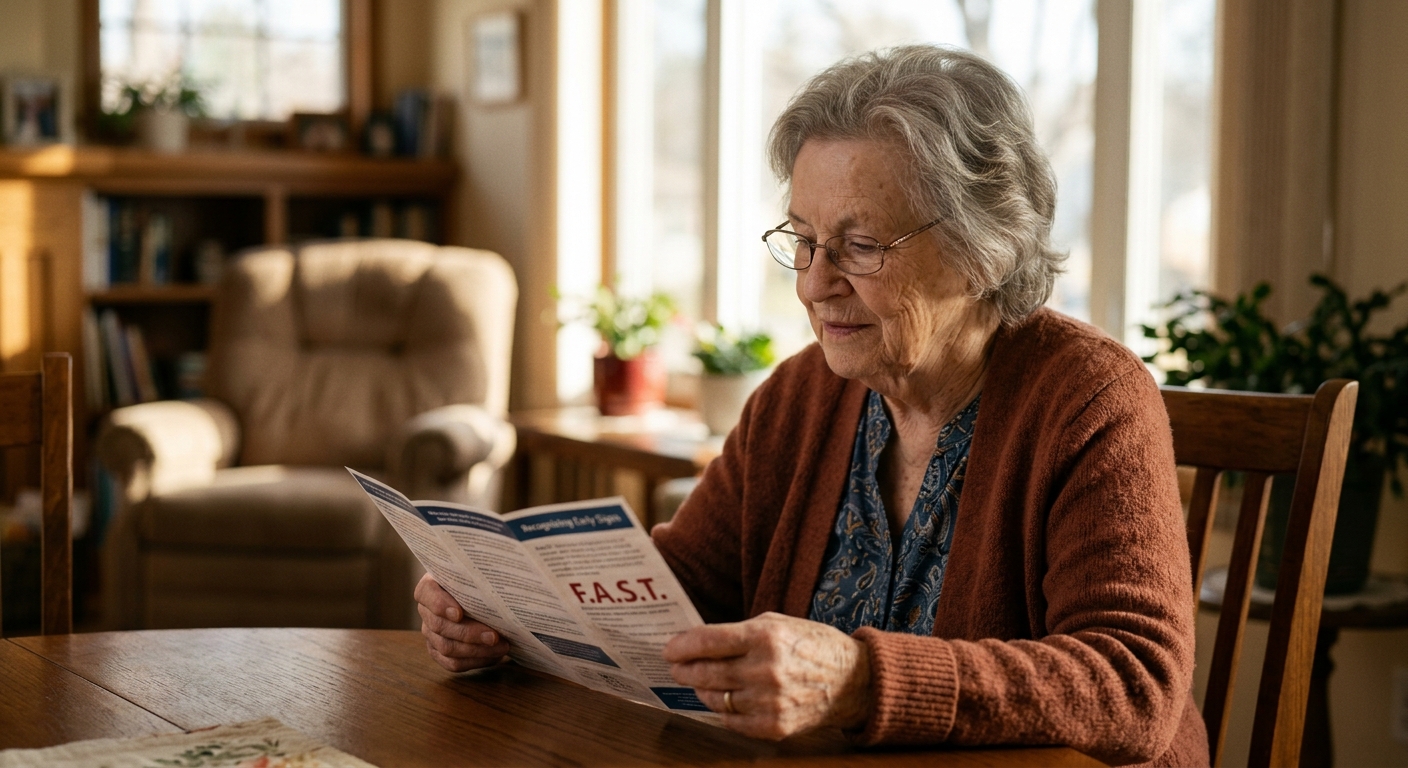
The American Stroke Association highlights the FAST test. Face drooping, Arm weakness, Speech difficulty, and Time to call 911, as a tool you can use right now. Yet for older adults, “F-A-S-T” may present more quietly. Seniors are more likely to have vague symptoms. They may simply “not feel right” or have sudden confusion. For example, a study published in the journal *Stroke* (2015) reported that almost 30% of elderly stroke patients presented with non-traditional symptoms, like dizziness, nausea, or visual changes, rather than classic weakness or aphasia.
Pro Tip: Don’t brush off subtle changes. If your instinct says, “Something’s strange here,” trust it. Err on the side of caution and call emergency services.
Common Mistake: Families often wait to “see if it gets better.” Don’t. Time lost is brain lost, literally. The window for clot-busting treatment can be as short as 3 to 4.5 hours.
For more on this, see our article on managing medications safely.
The Subtle Signs: Beyond “FAST”
One of the most overlooked truths about senior stroke symptoms is that they can be downright sneaky. I’ve witnessed this in my own family: My uncle Carl began putting his shirt on backward and messing up the names of longtime friends. No slurred speech, no paralysis, only small mistakes that were out of character.
Research backs this up. According to a study in *Neurology* (2017), up to 23% of seniors over 75 experience “atypical” presentations. These include:
- Sudden, unexplained fatigue
- Confusion or sudden personality changes
- Dizziness and loss of balance, sometimes with falls
- Sudden vision problems, such as blurred or double vision
Families often tell me, “Dad just seemed off,” without being able to pinpoint why. If you notice older adults acting in ways that are out of character, missing familiar turns while driving, forgetting names they’ve always remembered, struggling with the TV remote, perk up your antennas.
Pro Tip: Keep a “symptom log.” I always advise families to jot down changes (date, time, what happened) if they sense something is wrong. Having this on hand is invaluable for EMS or hospital staff if things progress.
If you suspect a stroke, have the person perform three simple tests:
- Smile: Does one side droop?
- Raise both arms: Does one arm drift down?
- Say a simple phrase, like “The sky is blue”: Is the speech slurred or odd?
Product Recommendation: Smartphone apps like “Stroke Alert” ($2.99) or “FAST Stroke” (free) guide you through these tests and can call 911 instantly.
Common Mistake: Assuming a symptom like confusion means dehydration or a urinary tract infection (UTI). While those are common, never dismiss sudden neurological changes. These can be the first signs of a brain emergency.
Sudden Physical Changes Not to Ignore
Imagine this: You’re having coffee with your neighbor, gentle Henry, who usually walks every morning. All of a sudden, Henry can’t seem to control his left hand, reaching for his biscuit. He tries to stand up and nearly tumbles over. There’s no pain, but he looks bewildered and unsure. These are exactly the sort of moments that set off my internal “stroke alert.” You can find more research-backed recommendations at the Alzheimer’s Association.
Basic physical changes you should never ignore include:
- Sudden numbness or weakness, especially on one side of the face, arm, or leg
- Sudden trouble walking, loss of balance, or coordination issues
- Difficulty swallowing (dysphagia) that appears out of nowhere
- Sudden severe headache, especially with vomiting or altered consciousness. Although headaches are less common in ischemic strokes (the most frequent type in seniors), they can signal a more dangerous hemorrhagic stroke.
A study from the *Journal of the American Geriatrics Society* (2018) showed that nearly 40% of stroke admissions among adults over 80 were because a bystander spotted these sudden physical changes and acted immediately.
Pro Tip: If you’re unsure, ask the person to close their eyes and touch their nose with each index finger. Unable or inaccurate attempts can indicate new neurological deficits.
Common Mistake: Assuming a complaint like “my arm feels funny” is due to arthritis or old age. The sudden onset is the differentiator here, non-progressive symptoms should always sound alarm bells.
Recommended Tool: A simple blood pressure monitor can be invaluable for seniors at home. Elevated blood pressure is a major risk factor for stroke. Expect to spend around $35 to $60 for a reliable home unit. I like Omron’s upper arm models; they’re easy for most seniors and caregivers to use.
When “Just Not Feeling Right” Means Trouble
This might be the trickiest sign of all, and the one I see missed the most. Seniors are masters at putting up with discomfort. They brush off feeling tired, dizzy, or “out of sorts.” One morning last year, a neighbor, Dolores, called to say she was feeling “off” but didn’t want to bother anyone. Her daughter arrived to find Dolores wandering around the kitchen, confused about where she kept the plates, insisting it was dinnertime at 9 a.m.
According to research in the *Journal of Stroke and Cerebrovascular Diseases* (2020), a third of seniors who had suffered a minor stroke reported vague feelings, weariness, malaise, or even a sinking sense of doom, often dismissed until more obvious symptoms developed. That’s a huge window lost. For more guidance, read our article on Creating a Senior-Friendly Garden. Clinical experts referenced by MedlinePlus recommend a personalized approach for each patient.
Action steps in these cases:
- Check for other “FAST” signs, even if vague
- Ask about recent falls or near-falls
- Listen to the person: If they say, “I just don’t feel like myself,” take it seriously
Pro Tip: I tell families to trust their gut. If your elderly loved one seems “off” and it’s sudden, act quickly rather than rationalizing it away.
Product Recommendation: Medical alert systems, Life Alert ($49.95/month) and Medical Guardian ($29.95/month), offer a button seniors can press if they feel unwell. In my experience, this peace of mind is worth its weight in gold, especially for those living independently.
Common Mistake: Dismissing slow, subtle, or “weird” behavior changes as simple confusion or dementia. Even established dementia patients can have acute neurological changes that need to be checked for stroke.
Vision Trouble: Sudden Sight Changes
Kathleen, 85, came to my attention when she began bumping into furniture and complaining about blurry vision in one eye. She thought it was her cataracts acting up, but her daughter saw something different: Kathleen couldn’t see objects on one side of her plate and repeatedly missed her mouth when eating. When an eye doctor performed an emergency visual field test, a hidden stroke was uncovered.
Sudden vision problems are a classic but easily overlooked symptom, especially in aging adults. According to the National Stroke Association, approximately 25% of stroke survivors experience vision changes during or after a stroke. These can include:
- Sudden loss of vision in one or both eyes
- Double vision or blurred vision
- Partial blindness or difficulty seeing to one side (hemianopsia)
- Visual confusion, such as not recognizing familiar faces
Action you can take today:
- If your loved one experiences *any* sudden vision change, get medical attention immediately. Time is critical for saving sight and minimizing brain injury.
- Perform a “confrontation test”: Ask them to look directly at you, then wiggle your fingers in each of the four corners of their vision. If they can’t see movement in one area, it’s a red flag.
Pro Tip: I always keep an “eye emergencies” card handy, with instructions and phone numbers for the nearest optometrist, urgent care, and hospital ER. Seconds matter when vision is at stake.
Product Recommendation: A good personal flashlight (about $10) lets you check pupil size and reaction in a pinch. Look for uneven pupils or slow reaction to light.
Common Mistake: Assuming vision changes are always due to glasses or eye disease. If it’s sudden, especially in one eye or linked to confusion or trouble moving, suspect stroke first.
Sudden Severe Headache or Unusual Pain
The “out-of-the-blue” headache is a red flag everyone should know. My cousin’s grandmother, a typically stoic farm woman, collapsed at the kitchen table, holding her head in agony, a headache she described as “the worst I’ve ever felt.” EMS arrived in minutes, and a dangerous hemorrhagic stroke was found on the CT scan. Healthcare professionals at the National Institute on Aging have published helpful guidelines on this topic.
Sudden severe headache, especially if it comes with vomiting, confusion, fainting, or neck stiffness, should always be treated as an emergency. The American Heart Association reports that about 10-15% of strokes are hemorrhagic (bleeding in the brain), and these types often present with intense pain.
Less severe but still worrisome are new pains that seem to “travel”, maybe a tingling arm, a burning cheek, or pins and needles down the leg. In an elderly loved one who has known high blood pressure or heart problems, these deserve immediate evaluation.
Pro Tip: If you don’t know whether a headache is “different” for your loved one, ask, “Is this how your head pain usually feels? Or is it new and much worse?”
Product Recommendation: A digital forehead thermometer ($20) helps distinguish stroke from infections, as fevers can mimic stroke presentation but require different care.
Common Mistake: Attributing new, intense pain to migraines, especially in older women who may never have had severe headaches. Migraines rarely appear for the first time in later life.
Stroke Signs in the Middle of the Night
One of the gut-wrenching stories that sticks in my mind is a son who found his mother in bed at 8 a.m., unable to speak or move her right side. She’d had a stroke in her sleep, what we call a “wake-up stroke.” This is frighteningly common in the elderly. The National Institutes of Health estimates that up to 20% of all strokes occur during sleep.
Symptoms you may notice:
- Difficulty waking up, or unusual grogginess
- Vomiting or choking during sleep
- One-sided weakness or drooping first seen in the morning
- Bed wetting or incontinence in someone previously continent
What can you do? Check on elderly relatives in the morning, especially if they live alone. If you see any of these signs, call emergency services right away, don’t wait to “see how they do after breakfast.”
Pro Tip: Install bed or motion sensors ($30 to $50 each; try brands like Smart Caregiver) for seniors with high stroke risk. Set an alert if your loved one does not get out of bed by a particular time. These tools have saved precious hours for families I know.
Common Mistake: Writing off drowsiness or weakness as “sleep inertia” or simply age. Sudden change in the ability to get out of bed is never normal. For more guidance, read our article on Transportation Options for Non-Driving Seniors. A growing body of research, summarized by Johns Hopkins Medicine, validates these approaches.
Emotional and Behavioral Changes
Here’s something that surprised me early in my career: Strokes can sneak in as sudden mood swings, anger, or apathy. Take the case of Mary, an 88-year-old living with mild dementia. Her delight in her favorite soap opera turned to irritation and indifference overnight. Her once-gentle nature was replaced by angry outbursts. Her family called me, thinking it was a progression of dementia. Imagine their shock when a trip to the ER revealed a stroke affecting her brain’s frontal lobe.
Research in *The Lancet Neurology* (2019) highlights that emotional and behavioral changes, depression, inappropriate laughter or crying, sudden anxiety, or personality shifts, may be the only early sign in up to 10% of elderly stroke patients.
Here’s what you should do:
- Document personality or mood changes, especially if they develop quickly
- Compare to baseline, what’s “normal” for your loved one?
- Ask about recent loss of interest or pleasure in favorite activities
Pro Tip: If your family member suddenly becomes apathetic, verbally aggressive, or uncharacteristically emotional, contact their healthcare provider. A rapid mental health change in a senior can reflect acute brain injury.
Product Recommendation: Journaling apps like “Day One” ($35/year) or simple spiral-bound notebooks are terrific for tracking daily changes. Share them with healthcare providers.
Common Mistake: Medical staff sometimes attribute mood changes to existing dementia or depression. Be an advocate, if it’s sudden or severe, it deserves further workup.
Silent Stroke: The Hidden Danger
We rarely think about what we can’t see. That’s the scariest thing about “silent” strokes, tiny strokes that often go unnoticed but add up over time. I’ll never forget an elegant gentleman named Arthur, whose only clue was “getting slower” with mental tasks. Quiet, repeated strokes had quietly chipped away at his sharpness, a process that MRI later confirmed. More evidence-based strategies are available from the World Health Organization.
Research from *The American Journal of Neuroradiology* (2022) reveals silent strokes occur five times more often than symptomatic ones, especially in adults over 65. These strokes can slowly lead to memory problems, difficulty concentrating, and eventually, vascular dementia.
What can you do?
- Pay attention to accumulating small changes, a drop in memory, calculation trouble, or new clumsiness with everyday tasks
- If your loved one has risk factors (high blood pressure, diabetes, atrial fibrillation), discuss a brain MRI with their doctor
Pro Tip: Prevention is paramount. Help your senior loved one control blood pressure, quit smoking, manage cholesterol, and keep regular medical appointments.
Product Recommendation: Blood pressure logs and pill organizers ($8 to $25) are simple, effective aids for daily health maintenance.
Common Mistake: Assuming forgetfulness is “just old age.” Persistent, accumulating cognitive changes may signal ongoing injury to the brain.
Preventing Stroke: Everyday Steps for Aging Adults
The good news? Much of stroke prevention in aging adults lies in consistent, everyday choices. You don’t have to overhaul your entire life in a day, but every step matters. I’ve watched countless families add years, and quality of life, by making a handful of small but crucial changes.
First, focus on controlling risk factors. The CDC says 80% of strokes are preventable. How? Here are the “big three”:
1. Manage blood pressure, Hypertension doubles stroke risk; aim for regular readings under 130/80 mmHg. Keep a home monitor and log daily results.
2. Control diabetes, Tight blood sugar management reduces small blood vessel damage.
3. Tackle cholesterol and heart conditions, Statins, antiplatelet medications, and blood thinners (for atrial fibrillation) can cut stroke risk significantly.
You should also:
- Exercise regularly, even if it’s just walking 20 to 30 minutes a day
- Eat a balanced, heart-healthy diet (think Mediterranean: fruits, veggies, whole grains, olive oil)
- Have regular check-ups with your primary care doctor and cardiologist
Pro Tip: Many insurance plans or local health agencies offer free blood pressure and cholesterol screenings for seniors. Take advantage of them.
Product Recommendation: “MyFitnessPal” (free for basic use) is an easy way for tech-savvy seniors to track their diet and activity. Basic pedometers ($12 to $25) encourage daily walks and friendly step competitions among family members.
Common Mistake: Ignoring pill routines or skipping blood pressure checks. Set alarms or use automatic pill dispensers ($40 to $100) to keep on track.
Recognizing the early signs of stroke in elderly adults is a skill every caregiver and family member should have in their toolkit. I’ve walked the hallways, sat at kitchen tables, and answered desperate midnight phone calls. Here’s what I want you to take away:
Step 1: Learn and Act on Stroke Signs
Keep the “FAST” acronym in your pocket, but reach for more. Notice subtle confusion, vision changes, sudden weakness, odd speech, or abrupt behavioral shifts. If something feels off, act immediately. Don’t wait for the “classic” stroke signs. When in doubt, call 911. No one has ever regretted getting to the hospital too soon.
Step 2: Use Tools and Resources
Equip your home with basic supports: a reliable blood pressure monitor, symptom logs, medical alert systems, and daily pill organizers. Don’t hesitate to enlist tech help for tracking medications and diet. These small investments (often $10 to $50) can save countless headaches later.
Step 3: Focus on Prevention and Advocacy
Stay vigilant. Encourage healthy routines: blood pressure checks, doctors’ visits, and consistent medication use. Advocate for your loved ones and speak up if you sense something out of the ordinary. Stroke prevention in aging is about steady, intentional effort, and you are your loved one’s best line of defense.
I’ve seen families go from paralyzing fear to confident advocacy, and you can, too. Share what you know, ask questions, and never underestimate your ability to save a life. Remember: a stroke can be subtle, but your actions should never be. Listen to your instincts, trust what you see, and you’ll give your loved one the best possible chance at recovery and health.
You Might Also Enjoy
Frequently Asked Questions
What are the first stroke signs you’ve actually seen in an older adult?
The clearest one for me wasn’t dramatic. It was my dad, James, in Dayton, Ohio, trying to say “remote control” and only getting out “re…re….” He laughed like it was nothing. Then his right mouth corner drooped when he smiled. No pain. No big fall. Just “off.” Another time, at church, a friend’s mother kept rubbing her arm and said it felt “asleep,” but it wasn’t waking up. That numbness and the weird speech were the clues. If someone suddenly seems unlike themselves, I treat that as a loud alarm.
What did you do first when you suspected a stroke?
I called 911. Not my sister. Not my dad’s doctor. 911. I used to think I should “confirm” it first, and I’m embarrassed to admit I once waited nearly 20 minutes because Dad kept insisting he was fine. That delay still makes my stomach tighten. When the paramedics arrived, I had his Medicare card and a list of meds ready—metoprolol, insulin, and a baby aspirin. I also wrote down the exact time I noticed the change (1:12 p.m.). The dispatcher asked that right away. Time mattered more than my pride.
How did Medicare play into the emergency care and hospital stay?
In the ER, nobody asked me for a credit card, which was a relief I can still feel in my bones. Dad had Original Medicare (Part A and Part B) plus a Medigap plan. After the hospital, I learned the money questions come later—deductibles, copays, and what counts as “observation.” We got hit with a surprise bill once because one night was coded as observation, not inpatient. I spent two evenings on the phone with Medicare at 1-800-MEDICARE and the hospital billing office. Eventually it was corrected, but I had to push.
What happens after the hospital—rehab, home health, and all the paperwork?
This part wore me down more than the ambulance ride. Dad went to a skilled nursing facility for rehab, and I thought Medicare would “just cover it.” It covered some, yes, but only if the stay met the rules, and the facility had to document progress. I kept a folder—discharge summary, therapy notes, dates, names. I still remember the administrator, Marlene, sliding a paper across the desk with daily rates that made my throat go dry. When Dad came home, we used home health for PT and speech therapy. I learned to ask for everything in writing, even when I felt annoying.
A Personal Note from Angela
I still hear my father’s voice from that afternoon—quiet, thick, almost like he had marbles in his mouth. Dad was a proud man. Vietnam vet. Worked at the GM plant outside Dayton for years. He hated “fussing.” When I told him we were calling 911, he looked at me like I’d betrayed him. I almost caved. I didn’t, and I’m grateful I didn’t. But I’ll admit something I don’t say out loud much: for months after, I replayed every minute and wondered if I should’ve noticed sooner. The guilt can sneak in, even when you do the right thing. If you’re reading this because you’re scared for someone you love, breathe. Your job isn’t to be perfect. Your job is to act. Write down the time. Make the call. Stay with them. You’re not alone in this.
Leave a Reply